


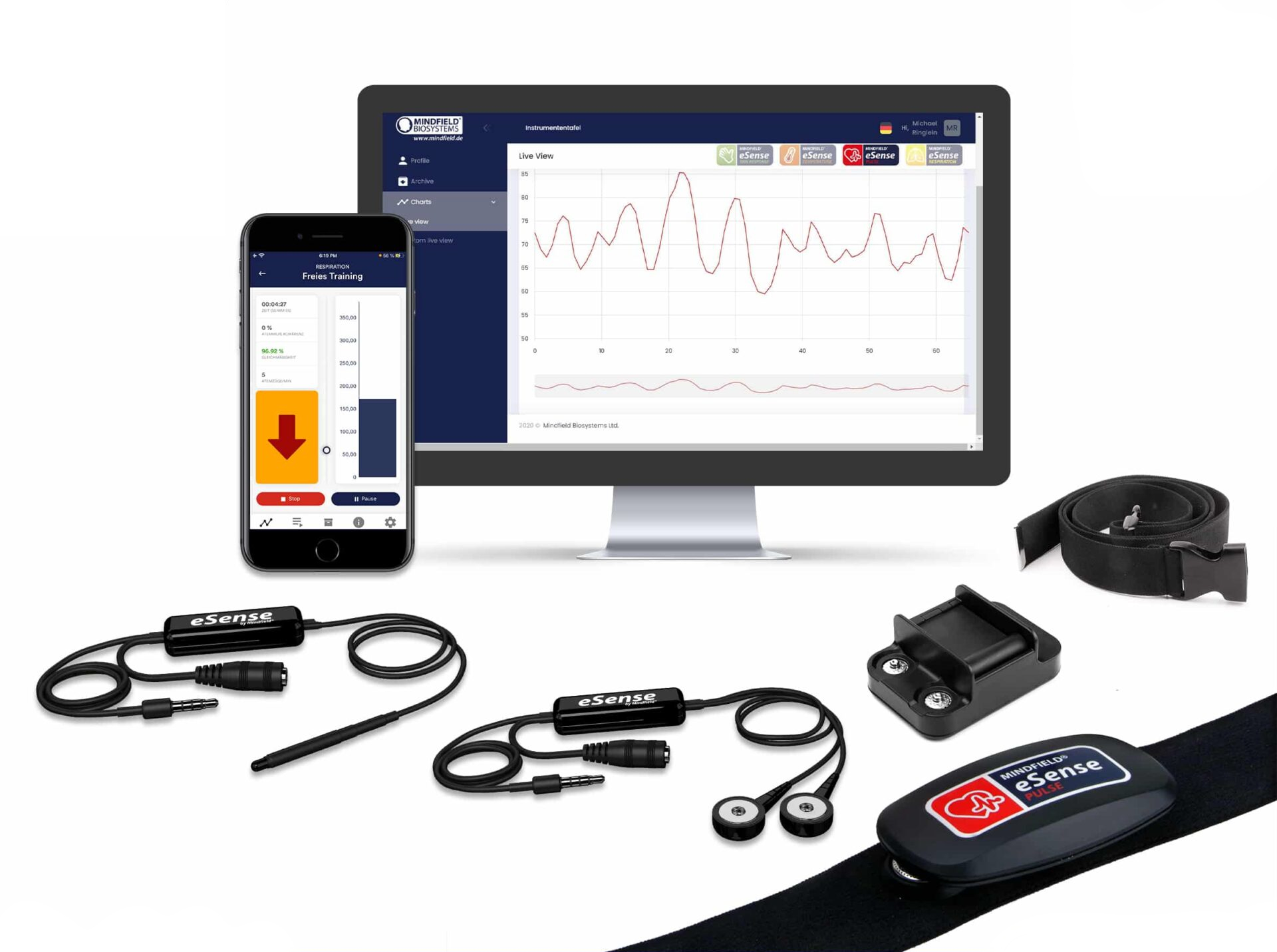
A biofeedback device measures physiological signals like skin conductance, temperature, or heart rate and displays them in real time. By making these invisible body processes visible, you can learn to manage stress, improve relaxation, and build greater body awareness from the comfort of your own home.
What Is a Biofeedback Device?
A biofeedback device is a sensor-based tool that picks up signals your body produces naturally — things like heart rate, muscle tension, skin conductance, and breathing patterns. It translates these signals into visual or audio feedback you can see and hear in real time. The idea is simple: once you can observe what your body is doing, you can start learning to influence it.
This approach is grounded in the principle of self-regulation. Your body constantly adjusts itself — heart rate speeds up under stress, muscles tense during concentration, skin conductance shifts with emotional arousal. A biofeedback device makes these automatic processes visible, giving you the opportunity to consciously guide them. Research suggests that this kind of training may support stress management, pain reduction, and overall well-being.
What makes modern biofeedback devices especially interesting is that they are no longer confined to clinical settings. Today’s portable sensors are designed for home use, making this technology accessible to anyone who wants to take a more active role in their own wellness routine.
Features and Benefits of a Home Biofeedback Device
A biofeedback device for home use works by capturing biological data — heart rate, muscle tension, skin temperature, or skin conductance — and presenting it on a screen in real time. This immediate feedback loop lets you see how your body responds to thoughts, breathing patterns, and relaxation techniques as they happen.
One of the biggest advantages is improved self-awareness. Most people have only a vague sense of how their body reacts to stress. A biofeedback device removes the guesswork by showing you exactly what is happening. Over time, users often develop an intuitive understanding of their own stress responses and learn techniques to manage them more effectively.
Another key benefit is personalized health monitoring. Because these devices are compact and portable, you can use them wherever and whenever it suits you — during a morning routine, after a stressful meeting, or as part of an evening wind-down. There is no need to schedule appointments or travel to a clinic.
Modern biofeedback devices typically include companion software that tracks your data over time, showing trends and progress. This long-term perspective helps you set realistic goals and stay motivated. The interfaces are designed to be straightforward, so you do not need a technical background to get started.
The versatility of biofeedback applications is another strength. Whether your focus is stress management, sleep quality, concentration, or muscle relaxation, there is a sensor and training approach for each. This flexibility makes biofeedback a practical tool for many different wellness goals.
Consistency matters. Like any training method, biofeedback works best when practiced regularly. Users who commit to short, frequent sessions often report noticeable improvements in well-being, stress resilience, and overall quality of life.
| Feature | What It Means for You |
|---|---|
| Real-time data capture | See heart rate, muscle tension, and skin conductance as they change |
| Live visualization | Immediate feedback on how your body responds to relaxation techniques |
| Portable design | Use your biofeedback device at home, at work, or on the go |
| Companion software | Track progress over weeks and identify patterns |
| Beginner-friendly | No technical expertise required to get started |
| Multiple applications | Stress training, relaxation, concentration, muscle work, and more |
How to Choose the Right Biofeedback Device for Home Use
With many options available, choosing the right biofeedback device comes down to understanding your goals and matching them to the right sensor. Here are the key factors to consider.
Ease of use should be at the top of your list. The best home devices connect quickly, have clear instructions, and do not require complicated setup procedures. If you are new to biofeedback, look for a device that gets you started within minutes rather than hours.
Smartphone compatibility is another important factor. Most modern biofeedback sensors pair with a companion app via Bluetooth, giving you access to guided exercises, real-time displays, and historical data on the device you already carry everywhere.
Measurement accuracy matters more than you might think. A biofeedback device is only as useful as the data it provides. Look for sensors from established manufacturers who have a track record in physiological measurement. Precise, reliable readings are the foundation of effective training.
Consider customer support and reputation as well. Companies with deep experience in biofeedback typically offer better documentation, more responsive support, and higher-quality hardware. Reading user reviews can help you gauge what to expect.
Prices vary widely. Entry-level sensors start under 100 EUR, while multi-parameter professional systems cost significantly more. Setting a budget upfront helps narrow your options. Keep in mind that a well-chosen device pays for itself through convenience — no recurring appointment fees, no travel time.
Ultimately, the best biofeedback device is one you will actually use. Prioritize comfort, simplicity, and a feature set that matches your specific goals. A thoughtful purchase sets you up for long-term success.
Our eSense Biofeedback Devices for Home Training
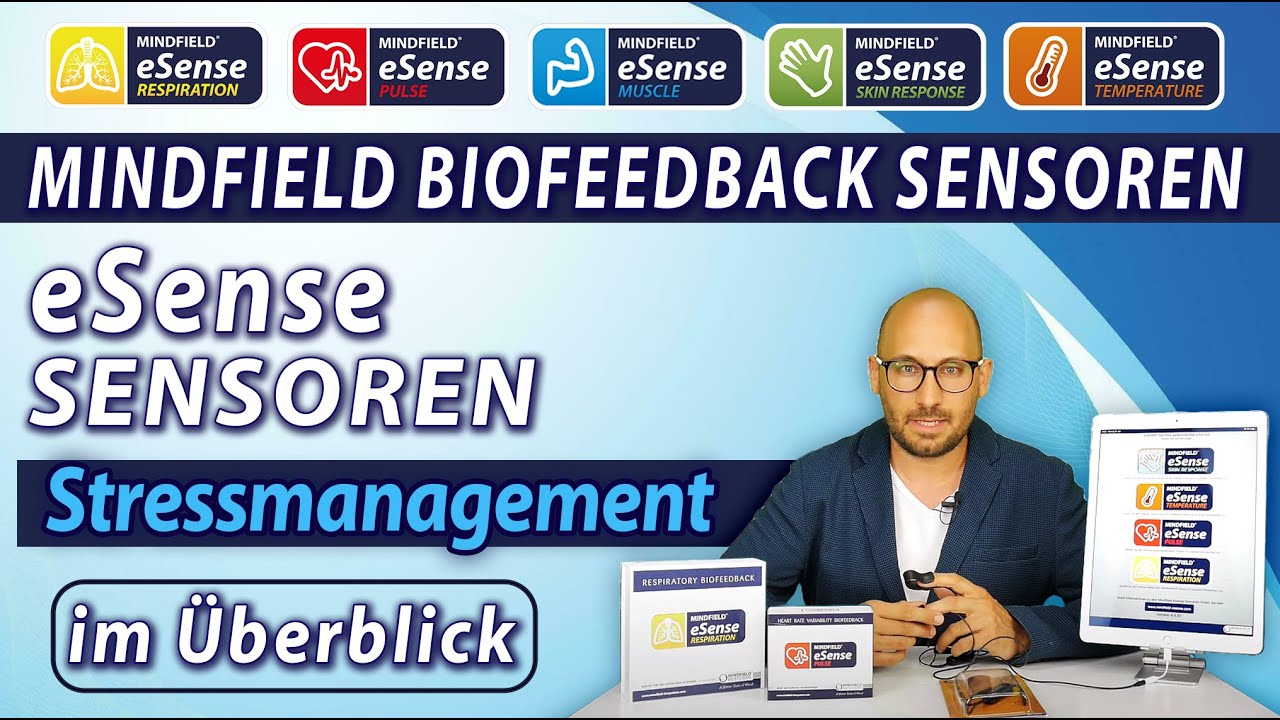
The Mindfield eSense sensors paired with the free eSense App offer one of the most accessible ways to practice biofeedback at home. Each sensor measures a specific physiological parameter in real time, and the app provides guided exercises, live feedback, and progress tracking. Available in our shop: eSense Skin Response (skin conductance/EDA), eSense Temperature (skin temperature), eSense Pulse (heart rate and HRV), eSense Respiration (breathing), and eSense Muscle (muscle activity via EMG). Everything you need for effective home training is included with each device.
What to Look for When Buying a Biofeedback Device
Choosing the right biofeedback device for your home depends on a few practical considerations:
Measurement parameter: Think about what you want to train. For stress management, skin conductance (EDA) responds clearly and quickly to changes in your arousal level. For relaxation and meditation, skin temperature provides gentle, intuitive feedback. For muscle-related goals, EMG is the way to go. And for overall cardiovascular wellness, heart rate variability (HRV) offers deep insights into your autonomic nervous system.
Ease of use: A good home biofeedback device should work right out of the box — no complicated calibration, no technical background needed. The eSense sensors connect via Bluetooth to your smartphone and are ready within seconds.
Software quality: The app matters just as much as the sensor. Look for guided exercises for beginners, clear progress charts, and the ability to review your training history over weeks and months.
Manufacturer experience: Choose devices from companies with real expertise in biofeedback. Mindfield has been developing professional biofeedback and neurofeedback systems for over 20 years and has built that experience into the eSense line for home users.
Mobile Sensors vs. Stationary Systems
Biofeedback devices generally fall into two categories: mobile sensors for personal use and stationary systems for professional settings.
Mobile sensors like the eSense range are compact, affordable, and designed for everyday use. Each sensor focuses on one specific parameter and connects wirelessly to your phone. They are ideal for daily home training and easily portable — you can take them to the office, on vacation, or anywhere you want to practice.
Stationary systems like the MindMaster BioNeuro measure multiple parameters simultaneously (EEG, EMG, EDA, temperature, and more). These are used in therapeutic and clinical settings, offering more channels and more detailed analysis — but they require professional training and a larger investment.
For most people getting started with biofeedback at home, the eSense sensors are the best fit. They deliver the same measurement quality as professional devices at a fraction of the cost, with an interface anyone can learn in minutes.
Frequently Asked Questions
How much does a home biofeedback device cost?
Mobile biofeedback sensors like the eSense series range from 99 to 499 EUR depending on the measurement parameter. The eSense Skin Response and eSense Temperature start at 99 EUR each — an affordable entry point for home biofeedback training.
Which biofeedback device is right for me?
It depends on your training goals. For stress management, a skin conductance sensor (eSense Skin Response) or temperature sensor works well. For HRV training, choose the eSense Pulse. For muscle relaxation, the eSense Muscle is the right pick. The eSense App supports all sensors with the same intuitive interface.
Do I need a smartphone for biofeedback?
Yes, eSense sensors connect via Bluetooth to a smartphone or tablet. The free eSense App (available for iOS and Android) displays your measurements in real time and provides guided exercises, training history, and progress statistics.
Recommended Products for Your Training
- eSense Skin Response – Skin conductance sensor (GSR/EDA) for biofeedback training
- eSense Pulse – Mobile ECG sensor for HRV biofeedback
- eSense Temperature – Skin temperature sensor for relaxation training