



Biofeedback is a non-invasive training method being researched as a relaxation technique for headaches. By measuring muscle tension and skin conductance, individuals learn to recognize and regulate stress responses early on. Discover which biofeedback approaches are being studied for headaches.
What Is Biofeedback and How Does It Work?
Biofeedback is a method aimed at gaining conscious control over involuntary bodily functions. This is achieved by monitoring specific physiological signals and feeding that information back to the user in real time. By making biological processes such as heart rate, muscle tension, skin temperature, or brainwave activity visible, users can learn to influence their physiological states. Biofeedback promotes self-regulation and may help reduce stress and develop healthier behavioral patterns. This is particularly relevant for biofeedback headaches training, as it provides access to bodily processes that often remain unconscious.
- Biofeedback definition
- Body function mechanisms
- Training goals
Key Findings
- Biofeedback is a scientifically grounded method for self-regulation of unconscious physiological processes.
- It improves awareness of bodily processes through visual or auditory feedback.
- Biofeedback may support headache management by enabling users to consciously control their muscle tension, heart rate, and skin temperature.
- Studies report positive effects of biofeedback in reducing tension headaches and migraines.
- The success of biofeedback headaches training is based on self-regulation of bodily functions.
- When applied correctly, biofeedback carries fewer risks and side effects compared to conventional methods.
Definition and Mechanism of Biofeedback
Biofeedback is a scientifically grounded method for the self-regulation of physiological processes. Bodily functions that normally operate unconsciously, such as heart rate, skin temperature, or muscle tension, are measured by technical devices and made visible in real time. Through this visual or auditory feedback, users can learn to consciously influence and control these functions. The core mechanism of biofeedback is based on the idea that by consciously changing body awareness, self-regulation for headaches can be supported and overall well-being improved.
The Role of Body Functions in Biofeedback
Biofeedback is an innovative method that allows users to monitor and regulate bodily functions to address headaches. Physiological parameters such as heart rate, muscle tension, and skin temperature are measured and fed back to the user visually or auditorily in real time. This feedback provides insight into the current physical state and enables conscious control to reduce tension and improve health. By recognizing and influencing these functions, a significant reduction in headaches can be achieved, which is particularly beneficial for tension headaches and migraines. Biofeedback increases awareness of physical processes and thus enables effective control.
| Body Function | Role in Biofeedback |
|---|---|
| Heart Rate | Monitoring relaxation |
| Muscle Tension | Reducing unconscious tension |
| Skin Temperature | Vasodilation |
How Can Biofeedback Help with Migraines?
Biofeedback is an innovative method aimed at sustainably reducing headaches. By applying this technique, users can learn to control their physiological functions and effectively reduce tension headaches. For migraines in particular, biofeedback has established itself as a promising training method, as it helps identify and control stress factors. Through improved control over muscle tension, heart rate, and other bodily functions, not only is pain intensity reduced, but the frequency of headache episodes may also be lowered in the long term. Biofeedback points the way to a more conscious relationship with your own body and thus offers a valuable complementary option.
“Biofeedback offers the possibility of consciously controlling physiological processes to address headaches and reduce the frequency of episodes by managing muscle tension and stress factors.”
Reducing Tension Headaches with Biofeedback
Tension headaches are a widespread complaint whose causes often lie in stress and muscular tension. Through biofeedback, sufferers can learn to specifically control these stress factors and thereby effectively reduce their headaches. By feeding back body functions such as muscle tension, biofeedback enables conscious relaxation of the affected muscles. Regular sessions lead to improved self-regulation and long-term support for headache training. Studies show that biofeedback for tension headaches is promising and can be meaningfully used as a complementary training method. It offers a non-invasive approach and promotes individual well-being.
Migraine Relief with Biofeedback Methods
Biofeedback is considered a promising training method for migraines. By monitoring and controlling specific body functions such as muscle tension and temperature, this technique may help prevent or alleviate migraine episodes. Users learn to perceive signals from their body more consciously and to regulate them specifically. Various studies 1,2,3 highlight positive effects of biofeedback in reducing the frequency and intensity of migraine episodes. This non-pharmaceutical training method not only offers a complementary option but also promotes overall well-being and self-control. Biofeedback thus becomes a valuable tool for the long-term management of migraines.
What Types of Biofeedback Are Used for Headaches?
Biofeedback represents a promising training method for headaches by enabling users to gain control over unconscious bodily processes. Electromyography (EMG) focuses on reducing muscle tension by monitoring electrical activity. Thermal biofeedback works on improving blood flow to address headaches. Heart rate variability biofeedback promotes heart rate regulation in response to stress, which in turn may reduce physiological stress. Each of these methods aims to better understand and manage individual triggers and physiological responses, which can subsequently have a preventive effect against headaches.
Electromyography (EMG) Biofeedback
Electromyography (EMG) biofeedback is a specific biofeedback method aimed at monitoring and reducing muscle tension. By measuring the electrical activity in muscles, users can learn to detect unconscious tension and consciously relax. This technique is frequently used for training with tension headaches, since muscle tension often triggers this type of headache. Studies 4,5,6 show that regular EMG biofeedback can significantly reduce the frequency and intensity of headaches. This makes it a valuable option for individuals seeking drug-free solutions.
Thermal Biofeedback
Thermal biofeedback is an innovative training method for headaches based on varying body temperature to influence blood circulation. This technique uses sensors to measure skin temperature and promotes active control of the body’s thermal state through feedback mechanisms. Research has shown that users who learn this technique may experience remarkable support for headaches, particularly migraines. This method is non-invasive and can be combined with other training methods to noticeably improve the quality of life for those affected.
Heart Rate Variability Biofeedback
Heart rate variability biofeedback is an innovative technique based on analyzing and controlling heart rate to improve health. This method examines the time intervals between heartbeats to draw conclusions about stress responses and general health. Through targeted relaxation exercises, users can learn to improve their heart rate variability (HRV), which contributes to a significant reduction in headaches and stress levels. Studies have shown that this form of biofeedback can be successfully used both for tension headaches and for migraine prevention. It supports holistic health promotion that naturally leads to greater well-being.
What Do Studies Say About Biofeedback Training for Headaches?
Biofeedback has established itself as a promising training method for headaches in recent years. Numerous studies1,2,3 report positive effects of this technique, particularly for tension headaches and migraines. By learning to actively control their bodily functions, users can not only alleviate acute symptoms but also reduce the frequency and intensity of episodes in the long term. Furthermore, biofeedback promotes self-awareness and personal responsibility, making it a valuable complement to other approaches. The ongoing success of this method has led more and more people to consider this form of training.
Studies and Research Findings
Biofeedback has established itself as a promising training method for headaches, supported by numerous studies and research findings. Researchers have shown that biofeedback can significantly reduce the frequency and intensity of headache episodes. A meta-analysis of several studies found that participants who received biofeedback experienced a reduction in headache frequency on average. This technique is used particularly for chronic tension headaches and migraines. Long-term investigations also show that biofeedback not only improves symptoms but also contributes to overall mental health.
Long-Term Benefits of Biofeedback
Biofeedback offers numerous long-term benefits for headache training, particularly for tension headaches and migraines. This non-invasive method enables users to gain deeper control over their body functions and thus achieve effective self-regulation. Studies show that regular biofeedback training may help significantly reduce the frequency and intensity of headaches. Moreover, it promotes increased awareness of physical and emotional states and their influence on headaches. Unlike pharmacological approaches, biofeedback can be used as a well-tolerated long-term method, making it an environmentally friendly and sustainable training option.
How to Get Started with Biofeedback for Headaches
Starting biofeedback training for headaches requires careful planning. First, it is important to consult an experienced biofeedback practitioner to consider individual needs and choose the most suitable biofeedback method. The training plan typically includes an introductory session explaining how it works and what to expect. Multiple sessions usually follow, aimed at capturing and controlling specific physiological responses. Training success depends on consistent participation and collaboration with the practitioner. Check in advance whether your health insurance covers any costs.
Consulting and Choosing an Experienced Practitioner
When choosing an experienced practitioner for biofeedback headaches training, thorough consultation is essential. A qualified practitioner will analyze your specific needs and create a tailored training plan. It is important to rely on certified professionals with comprehensive knowledge of biofeedback training. Choosing the right practitioner not only supports the effectiveness of the training but also minimizes potential risks. Schedule an introductory consultation at the outset to ensure the training methods meet your expectations. This lays the foundation for successful training.
Expected Sessions and First Steps
Getting started with biofeedback training for headaches usually begins with selecting a qualified practitioner. They will conduct a detailed initial consultation to determine individual needs. A typical training plan consists of multiple sessions, often weekly, held at specialized facilities. In these sessions, users learn how to monitor their body functions and specifically control them to achieve self-regulation. Training success depends on regular application and the user’s active participation. Home exercises can additionally support the process. Generally, initial improvements can be expected after a few weeks.
What Are the Risks and Side Effects of Biofeedback?
Biofeedback is generally considered a safe and non-invasive training method for headaches. Nevertheless, potential risks and side effects should be noted. Some users report headaches, dizziness, or nervousness at the beginning of training, though these are usually temporary in nature. It is important that professional guidance is provided by an experienced practitioner to minimize unwanted effects. Compared to pharmaceutical approaches, biofeedback carries significantly fewer long-term risks. Users should discuss any concerns with their practitioner and consider using biofeedback as a complementary training method alongside other approaches.
Possible Risks and Precautions
Biofeedback is often viewed as a safe, non-invasive training method for headaches. Nevertheless, users should be aware of potential risks and precautions to optimize their training. Risks include possible overuse of certain sensors and occasional headaches due to insufficient technique mastery. It is therefore essential to begin training under the guidance of an experienced practitioner. Any existing health conditions should also be discussed as a precaution. Compared to traditional methods, biofeedback offers the advantage of being a non-invasive training method that requires no medication and has fewer side effects.
Important Medical Notice: The use of biofeedback and neurofeedback for existing conditions must only be undertaken after consultation with and under the supervision of qualified medical professionals. Self-directed use without professional guidance may worsen existing conditions or delay important treatments. The technology serves only as a supportive measure and does not replace medically necessary treatments. A thorough medical diagnosis and regular monitoring by healthcare professionals are required before beginning any application.
Comparison with Other Headache Approaches
Compared to traditional headache approaches, biofeedback offers a holistic and non-invasive alternative that focuses on improving the body’s self-regulation. Conventional treatment approaches such as medication aim to alleviate symptoms, while biofeedback aims to understand and control the underlying physical factors. Although medication often provides quick relief, biofeedback can contribute long-term benefits through improved body awareness and control. It is important to carefully weigh the pros and cons to find the right strategy for individual needs.
- Biofeedback: Non-invasive, promotes self-regulation
- Medication: Fast-acting, symptomatic
- Comparison: Long-term benefits vs. quick relief
Our eSense Devices for Biofeedback and Headaches
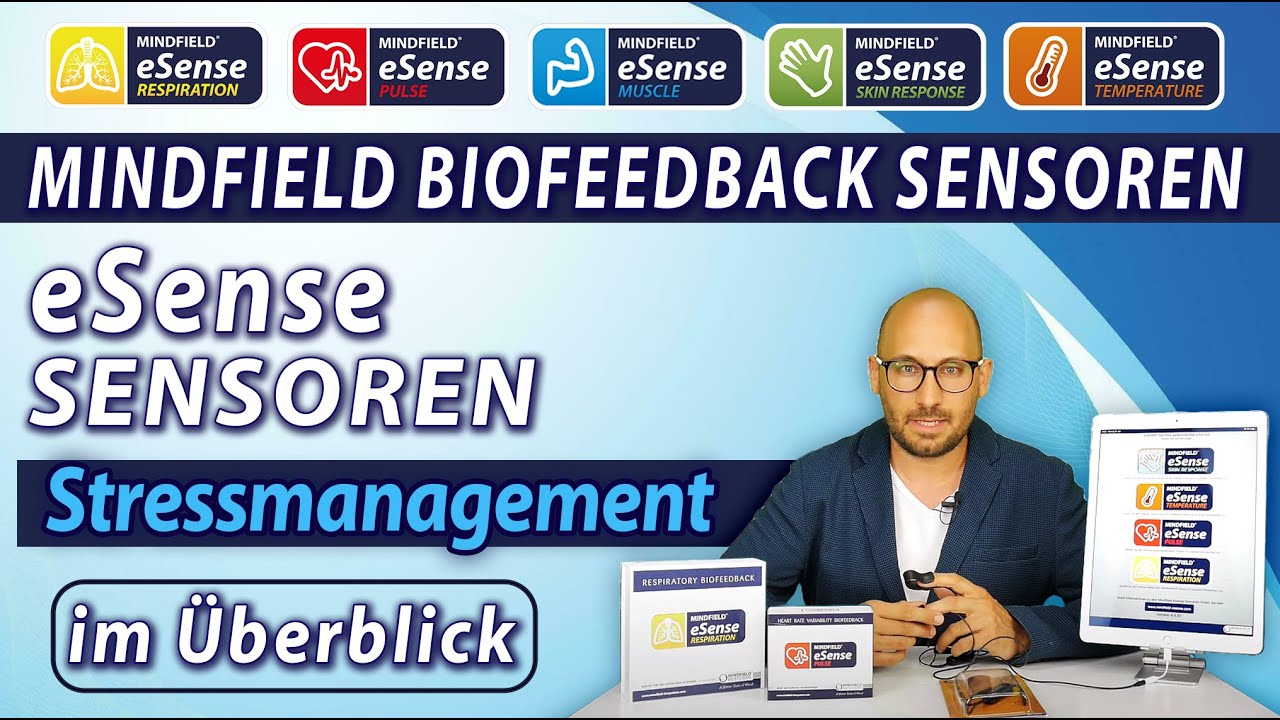
The Mindfield eSense sensors combined with the eSense App offer an effective way to use biofeedback specifically for headache training, conveniently from home. Through precise measurement of physiological parameters such as skin conductance, temperature, pulse, or muscle tension, typical triggers of tension headaches can be identified and actively influenced. Users learn to reduce stress-related responses and regulate tension early on. In our shop, you will find suitable devices: the eSense Skin Response (skin conductance), eSense Temperature (temperature), eSense Pulse (pulse/HRV), eSense Respiration (breathing), and eSense Muscle (muscle activity) – ideal for individual home training to sustainably reduce headaches. The delivery includes everything you need for a successful start.
FAQ on Biofeedback and Migraines
What is biofeedback?
Biofeedback is a method aimed at gaining conscious control over involuntary bodily functions by monitoring body processes such as heart rate or muscle tension.
Which body functions are monitored during biofeedback?
During biofeedback, heart rate, muscle tension, skin temperature, and brainwave activity are monitored to help users influence and control physiological states.
How does biofeedback help with headaches or migraines?
Biofeedback may help reduce headaches by enabling users to learn to control physiological functions such as muscle tension, which is particularly relevant for tension headaches and migraines.
What types of biofeedback are there?
There are several types of biofeedback, including electromyography (EMG) biofeedback, thermal biofeedback, and heart rate variability biofeedback, each targeting specific physiological processes.
What are the risks and side effects of biofeedback?
Biofeedback is considered a safe, non-invasive training method, but temporary headaches, dizziness, or nervousness may occur, especially at the beginning of training.
References
1 Nestoriuc, Y., & Martin, A. (2007). Efficacy of biofeedback for migraine: a meta-analysis. Pain, 128(1-2), 111-127.
2 Nestoriuc, Y., Martin, A., Rief, W., & Andrasik, F. (2008). Biofeedback treatment for headache disorders: a comprehensive efficacy review. Applied Psychophysiology and Biofeedback, 33(3), 125-140.
3 Treadwell, J. R., Franck, C., & Wu, M. (2022). Behavioral interventions for migraine prevention: a systematic review. Cochrane Database of Systematic Reviews, (7).
4 Budzynski, T.H., Stoyva, J.M., Adler, C.S., & Mullaney, D.J. (1973). EMG biofeedback and tension headache: A controlled outcome study. Psychosomatic Medicine, 35(6), 484-496.
5 Nestoriuc, Y., Martin, A., Rief, W., & Andrasik, F. (2008). Biofeedback treatment for headache disorders: A comprehensive efficacy review. Applied Psychophysiology and Biofeedback, 33(3), 125-140.
6 Evers, S., May, A., Fritsche, G., Kropp, P., Lampl, C., Limmroth, V., … & Diener, H.C. (2008). Guideline of the German Migraine and Headache Society and the German Society of Neurology. Nervenheilkunde, 27, 933-949.
Disclaimer: The information in this article is for general informational purposes only and does not replace medical advice, diagnosis, or treatment. Biofeedback and neurofeedback are training methods for self-regulation and are not medical treatments. Always consult a physician or qualified therapist for health concerns.
Frequently Asked Questions
Which biofeedback methods are being studied for headaches?
EMG biofeedback (measuring muscle tension) and skin temperature biofeedback are particularly researched for headaches. Both methods aim to train the ability to relax and to perceive stress responses early.
Can biofeedback replace headache medication?
Biofeedback is a training method and not a replacement for medical treatment. It is used as a complementary relaxation technique. Always speak with your doctor about appropriate measures for headaches first. Biofeedback can be part of a comprehensive approach.
How does biofeedback relaxation work for headaches?
You learn to consciously perceive muscular tension in the neck and forehead area and to release it deliberately. The biofeedback sensor shows you the degree of tension in real time. Through regular training, the ability to self-regulate can be improved.
Matching Products for Your Training
- eSense Skin Response – Skin conductance sensor (GSR/EDA) for biofeedback training
- eSense Temperature – Skin temperature sensor for relaxation training