



In psychological practice, biofeedback is used as a training method for self-regulation. By providing feedback on physiological signals, clients learn to consciously perceive and influence stress responses. Discover how biofeedback is applied in psychology and which areas of use are being researched.
What Is Biofeedback?
Biofeedback is an innovative method in psychology that helps users gain control over certain physiological processes. Using technical devices, body signals such as heart rate, breathing, and muscle tension are measured and visualized. Historically, biofeedback originated in the 1960s, when scientists began investigating the potential of feedback for self-regulation. Today, biofeedback is regarded as a valuable tool for improving understanding of how one’s own body works and for supporting psychological self-regulation.
Key Takeaways
- Biofeedback is a method through which people can influence physical functions using technology.
- Through the use of biofeedback, emotional stability and stress reduction can be achieved.
- It is particularly effective in stress management, anxiety training, and for supporting emotional regulation.
- The advantages of biofeedback lie in improved self-awareness and its non-invasive training approach.
- Challenges in its application include user dependency and the need for professional guidance.
- In the future, biofeedback promises broader application in psychology through innovative technological developments.
Definition of Biofeedback
Biofeedback is a scientific method in which people learn to consciously influence their physiological functions through the use of technology. This technique is based on observing and feeding back the body’s own signals such as heart rate, muscle tension, and skin temperature. Originally developed in the 1960s, biofeedback has found its place in psychological training. It enables individuals to better understand and control their body responses, which can lead to improved self-regulation and enhanced well-being.
Historical Background
The history of biofeedback dates back to the 1960s, when researchers first recognized the significance of biological feedback for modifying psychophysiological processes. Initially, EEG devices were used to monitor brain activity and thereby promote self-regulation. Over the years, biofeedback has evolved and given rise to techniques that are now applied across various areas of psychology. This development has not only refined the method but also strengthened understanding and acceptance.
How Does Biofeedback Work in Psychology?
Biofeedback is an essential tool in modern psychology and is based on body awareness. The technique uses technological aids to measure and visualize physiological processes such as heart rate and breathing patterns. The goal is to contribute to emotional stability and stress reduction through feedback and conscious control of these processes. During sessions, users learn to recognize and influence their own visual and auditory signals. This form of training typically requires no medication and therefore offers a non-invasive alternative to conventional methods.
Core Principles of Biofeedback
The core principles of biofeedback are based on making physiological processes perceptible that normally occur unconsciously. Using sensors, body functions such as heart rate, muscle tension, or skin conductance are monitored and fed back to the individual in real time. The goal is to gain conscious control over these functions through immediate feedback in order to improve self-regulation. This supports the recognition and management of stress responses and promotes a deeper understanding of one’s own body reactions.
Technological Tools in Use
Biofeedback relies on state-of-the-art technological tools to provide precise feedback on physical processes such as heart rate, skin conductance, and muscle tension. These instruments, including sensors and computer software, make it possible to visualize subtle physiological changes and present them to the user in real time. Such technologies promote understanding and control over physical reactions that often occur unconsciously. This increases the effectiveness of the training, as users learn to consciously manage their physical states and thereby achieve psychological well-being.
What Psychological Applications Does Biofeedback Have?
Biofeedback offers an impressive range of applications in psychology. It is a valuable tool for stress management and relaxation, can be used in anxiety training, and supports emotional self-regulation. By monitoring physiological processes and providing targeted feedback to users, they can learn to better control their body’s own reactions. Biofeedback thus opens up a holistic and personalized training approach that can support self-regulation in psychological challenges. It promotes not only the user’s awareness but also the ability for self-regulation.
Stress Management and Relaxation
Biofeedback has established itself as an effective tool in stress management and for relaxation. By observing physiological processes such as heart rate or skin conductance, individuals learn to more consciously control their physical responses to stress. This method makes it possible to improve stress coping without medication support. Modern technologies such as wearable sensors and apps support autonomous stress relief, simplifying access to this method. Overall, biofeedback promotes a deeper understanding of one’s own reactions and thus a more sustainable approach to stressful situations.
Anxiety Training
Biofeedback is a promising training method for anxiety in psychology. Through the use of technological aids, users can observe physical reactions such as heart rate and skin conductance in real time. These self-monitoring mechanisms enable them to consciously control and mitigate unconscious stress responses. Studies show that biofeedback, combined with conventional training approaches, can lead to a significant reduction in anxiety. The non-invasive nature and long-term effects of this method offer users a valuable alternative in modern psychological practice.
Support for Depression
Biofeedback offers promising support for depression in psychology. This method makes it possible to monitor and control physiological signals such as heart rate and skin conductance in order to better regulate emotional states. Through the conscious perception and feedback of these signals, users can learn to restore their emotional balance and promote emotional self-regulation. Biofeedback thus fosters self-efficacy and, as a complementary training method, can offer considerable advantages by contributing to psychological stability in a natural and non-invasive way.
What Benefits Does Biofeedback Offer?
Biofeedback offers numerous benefits that make it an attractive training option in psychology. The technique promotes improved self-awareness by helping individuals recognize and influence their physiological states. As a non-invasive training method, biofeedback offers a gentle alternative to medication-based approaches. Furthermore, it demonstrates long-term effectiveness, especially in stress reduction and supporting psychological well-being. The ability to learn autonomously and control one’s own sensations contributes to sustainable health promotion.
Improved Self-Awareness
Biofeedback offers significant benefits for improving self-awareness. Through the use of sensory technologies, individuals can observe in real time how their body reacts to various psychological and physical states. This immediate feedback enables participants to develop a deeper awareness of their physical reactions and emotional states. A better understanding of these internal processes can lead to optimized responses and enhanced mental well-being. Biofeedback thus not only strengthens self-awareness but also promotes personal responsibility for one’s own well-being.
Non-Invasive Training Approach
Biofeedback is regarded as a significant, non-invasive training approach that is gaining increasing importance in psychology. Unlike pharmacological approaches, biofeedback makes it possible to monitor and regulate the user’s physical reactions without the use of medication. This leads not only to improved self-awareness but also to sustainable self-regulation. Users benefit from the long-term nature of the training, as learned techniques for relaxation and stress management can be applied independently. Through this gentle method, considerable progress in psychological support can be observed.
Long-Term Effectiveness
Biofeedback is known for its long-term effectiveness in psychological training, as it promotes the ability to consciously control and regulate physiological processes. These techniques support users in bringing about sustainable behavioral changes by reducing stress and anxiety or improving emotional stability. Through continuous self-monitoring and practice, biofeedback can enable lasting improvement in mental health. Long-term effectiveness is based on strengthening self-control and using non-invasive methods that can be easily integrated into daily life.
What Challenges Exist in Using Biofeedback?
Biofeedback offers significant psychological benefits, yet there are also challenges in its application. A central difficulty lies in user dependency; success depends heavily on the individual’s motivation and commitment. The need for professional guidance is equally important in order to achieve optimal results. Without expert support, it can be difficult to correctly interpret and apply the captured physiological data, which can affect the effectiveness of the training.
User Dependency and Motivation
User dependency and motivation represent significant challenges in the application of biofeedback. Its effectiveness depends crucially on consistent use by the user. Without regular practice, progress can quickly be lost, as motivation is often a decisive factor. Working with a trained practitioner can help boost motivation and secure the learning effect over the long term. A structured motivation system can support users and ensure that biofeedback is used effectively and achieves sustainable results.
“The sustainable use of biofeedback depends heavily on personal motivation and regular practice.”
The Need for Professional Guidance
Professional guidance when using biofeedback is of essential importance. While biofeedback can be an effective method for promoting self-regulation and stress management, its application requires specific professional expertise. A trained practitioner can guide the process, monitor individual progress, and support users in applying techniques correctly. This professional support ensures that the use of biofeedback is both safe and effective. It also provides the opportunity to individually address personal needs and better understand complex relationships.
How Can You Get Started with Biofeedback?
Getting started with biofeedback first requires selecting a qualified practitioner. This professional helps you plan sessions suited to your needs. Using modern devices, physiological data is analyzed in real time to deepen your understanding of your physical reactions. Through regularly guided sessions, you can gradually learn how to control and improve your own physical and emotional states, which may lead to an enhanced quality of life. This approach combines scientific foundations with practical applications.
- First steps with biofeedback
- Select a qualified practitioner
- Plan customized sessions
- Analyze physiological data
Choosing a Qualified Practitioner
Choosing a qualified practitioner is crucial for the success of biofeedback training. A competent practitioner has in-depth knowledge of psychophysiology and in the application of current techniques and devices. It is advisable to look for certificates and professional experience. An initial consultation should be used to understand the practitioner’s approach and ensure that a trustful collaboration is possible. A well-informed decision creates the foundation for effective and individualized training.
| Criterion | Description |
|---|---|
| Expertise | Psychophysiological knowledge |
| Certificates | Recognized qualifications |
| Professional Experience | Practical experience in biofeedback |
| Trustful Relationship | Open communication and understanding |
Getting Started with Biofeedback Sessions
Starting biofeedback sessions can be a transformative experience in psychological training. First, it is essential to find a qualified practitioner who can guide you safely through the process. The initial sessions focus on familiarizing the user with the technology used and explaining the basic principles. This enables targeted self-observation and self-control, which can lead to lasting improvements in emotional and physical well-being.
Our eSense Devices for Biofeedback and Neurofeedback
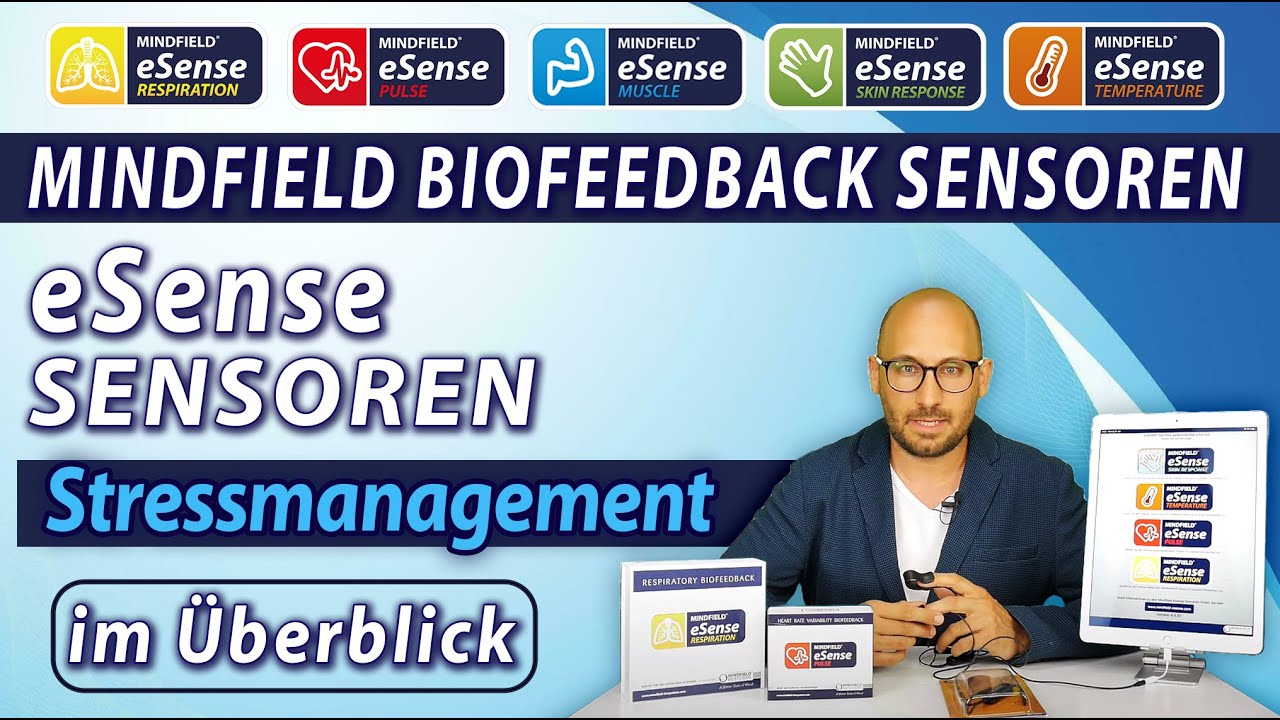
Using the Mindfield eSense sensors together with the eSense App provides an optimal way to practice biofeedback. This combination allows for precise capture and display of physiological parameters such as skin conductance, temperature, or pulse in real time. Users can specifically improve their physical and mental state. Various devices are available in the shop: the eSense Skin Response (skin conductance), eSense Temperature (temperature), eSense Pulse (pulse/HRV), eSense Respiration (breathing), and eSense Muscle (muscle activity). Our devices come with everything needed for effective home training.
What Future Perspectives Does Biofeedback Offer in Psychology?
Biofeedback is continuously being developed further in psychology and offers promising future perspectives. Innovative technological developments enable improved integration into various concepts. Future applications include expanded individualization and possibilities for specifically supporting users. New devices and software could considerably enhance the understanding and effectiveness of training approaches. This progress opens up opportunities for broader application in healthcare, with a focus on promoting well-being and supporting psychological balance.
“Biofeedback enables the promotion of well-being through innovative technologies and personalized training approaches.”
Innovations and Technological Developments
Biofeedback is experiencing remarkable progress through innovations and technological developments in psychology. New devices and software solutions enable more precise measurement and analysis of physiological reactions. Additionally, the integration of artificial intelligence improves the adaptability of biofeedback systems to individual needs. These technologies support practitioners in developing personalized strategies for improving their users’ mental well-being. Through virtual reality and wearable technologies, biofeedback is becoming more accessible and effective, sustainably influencing training success.
| Technological Developments | Impact on Biofeedback |
|---|---|
| Artificial Intelligence | Adaptability |
| Virtual Reality | Accessibility |
| Wearable Technologies | Effectiveness |
Integration into Various Training Concepts
The integration of biofeedback into various training concepts opens new pathways in psychological practice. By combining it with cognitive behavioral therapy, mindfulness techniques, and other approaches, individualized training plans can be tailored to specific needs. Biofeedback enables more precise measurement and monitoring of physiological states, leading to a holistic view of the user. This integration promotes sustainable change and supports well-being through personalized programs that can work preventively. Through this interdisciplinary approach, the efficiency of psychological care is significantly enhanced.
FAQ About Biofeedback
What is biofeedback?
Biofeedback is a scientific method in which people learn to consciously influence their physiological functions through the use of technology.
How does biofeedback work in psychology?
Biofeedback uses technological tools to measure and visualize physiological processes such as heart rate and breathing patterns, promoting self-regulation and stress reduction.
What psychological applications does biofeedback have?
Biofeedback is used for stress management, relaxation, anxiety training, and to support emotional self-regulation.
What benefits does biofeedback offer?
Biofeedback offers improved self-awareness, is a non-invasive training method, and shows long-term effectiveness for psychological well-being.
What challenges exist when using biofeedback?
Challenges with biofeedback include user dependency and the need for professional guidance to achieve effective results.
How can you get started with biofeedback?
Getting started with biofeedback requires selecting a qualified practitioner and planning customized sessions to analyze physiological data.
What future perspectives does biofeedback offer in psychology?
Biofeedback offers promising future perspectives through technological developments and integration into various training concepts.
Disclaimer: The information in this article is for general informational purposes only and does not replace medical advice, diagnosis, or treatment. Biofeedback and neurofeedback are training methods for self-regulation and are not medical treatments. Always consult a physician or qualified therapist for health concerns.
Frequently Asked Questions
How is biofeedback used in psychology?
In psychological practice, biofeedback serves as a tool for self-awareness. Clients see their stress responses in real time and learn to consciously influence them. The method is frequently used as a complement to talk therapy and behavioral therapy.
For which psychological topics is biofeedback being researched?
Biofeedback is being researched for stress management, anxiety, tension headaches, and attention training, among other areas. The evidence varies by area of application. As a training method for self-regulation, it is being studied in various therapeutic contexts.
Is biofeedback a recognized method in psychology?
Biofeedback is established as a training method in psychology and is addressed by professional societies. The German Society for Biofeedback (DGBfb) offers continuing education and certifications. The evidence base is continually expanded through studies.
Products for Your Training
- eSense Skin Response – Skin conductance sensor (GSR/EDA) for biofeedback training