


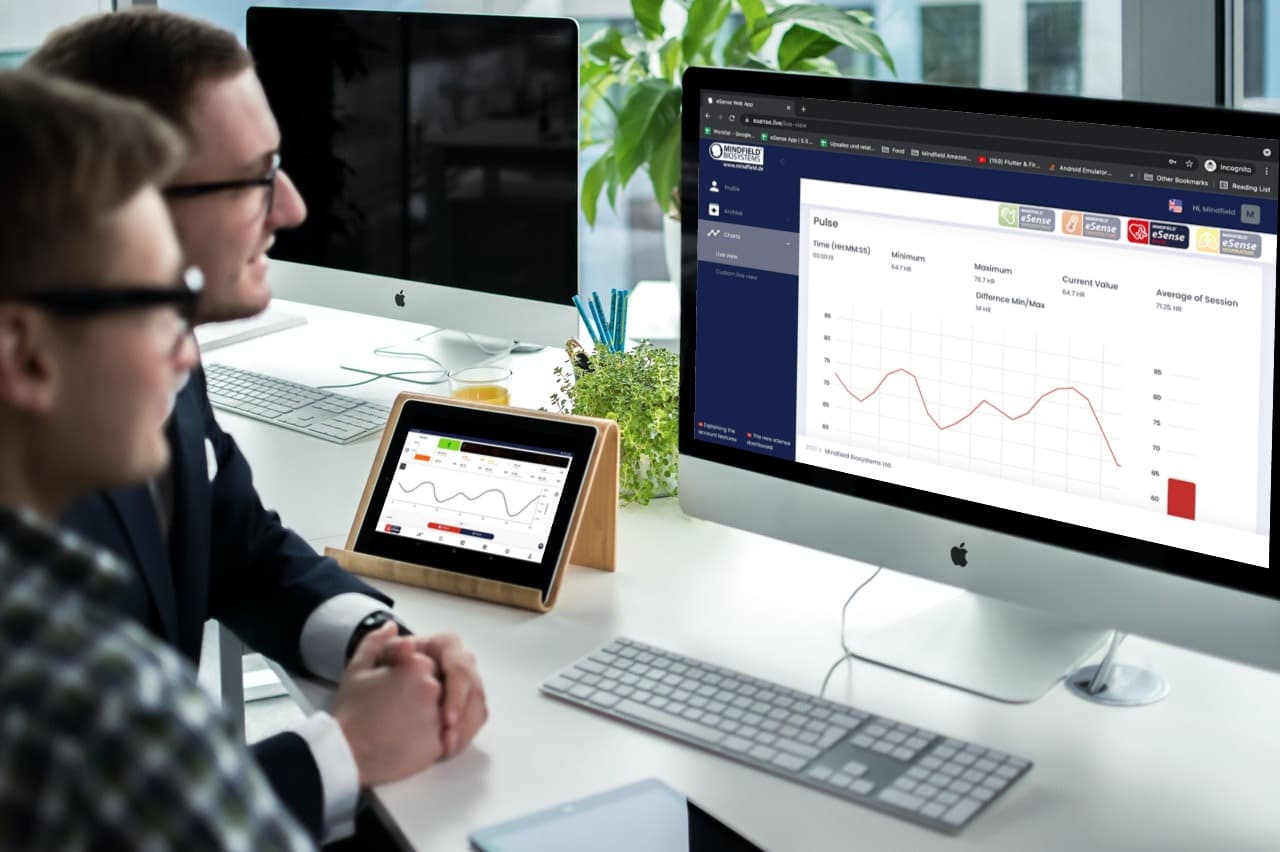
Biofeedback sensors measure a range of physiological signals: skin conductance (EDA), skin temperature, heart rate and HRV, muscle tension (EMG), and breathing rate. Each parameter reveals different aspects of how your body responds to stress and relaxation. Learn what biofeedback measures, what each signal means, and which sensor fits your goals.
What Is Biofeedback?
Biofeedback is a training technique that makes normally invisible body processes — like heart rate, skin temperature, or muscle tension — visible in real time. By seeing or hearing these signals as they happen, you can learn to influence them consciously. The goal is to reduce stress, build awareness of your body’s responses, and improve overall well-being. Specialized sensors capture the data, and software displays it on a screen or through audio cues. Over time, users develop the ability to shift their physiological state on demand, even without the equipment.
- Heart rate and heart rate variability (HRV)
- Skin conductance (EDA / GSR)
- Skin temperature
- Muscle tension (EMG)
- Breathing rate and pattern
Key Takeaways
- Biofeedback is a technique for building conscious awareness and control of physiological processes.
- Key measurable parameters include heart rate, skin conductance, skin temperature, muscle tension, and breathing rate.
- Biofeedback can also provide insight into psychological states like stress levels and emotional regulation.
- Accurate biofeedback data requires proper sensor calibration and user training.
- Biofeedback training is widely used in sports performance and stress management.
- Technical limitations and individual differences can influence biofeedback outcomes.
- Investing in biofeedback offers both health and cost-efficiency benefits over the long term.
Defining Biofeedback
Biofeedback is a method for measuring and optimizing the body’s physiological processes. It works by feeding back biological signals — such as heart rate, skin conductance, or muscle activity — so that users can develop better control over functions that normally operate below conscious awareness. The precise data collected during biofeedback sessions can be used to train specific responses, improving both physical self-regulation and psychological well-being.
How Biofeedback Works in Detail
Biofeedback relies on measuring biological signals and displaying them to the user in real time. Specialized sensors capture physiological parameters like heart rate, muscle tension, or skin temperature. The data is visualized on a screen or conveyed through sound, giving users direct insight into what is happening inside their body. With practice, users learn to make targeted changes — calming the nervous system, releasing muscle tension, or deepening their breathing — and these skills transfer into daily life.
What Physical Parameters Can Biofeedback Measure?
Biofeedback can measure several physical parameters that are essential for understanding how the body functions. These include heart rate, skin temperature, skin conductance, muscle tension, and breathing rate. Each parameter provides a different window into your physiological state and responds to stress, relaxation, and physical effort in distinct ways. Together, they offer a comprehensive picture of autonomic nervous system activity.
“Biofeedback is a tool that makes it possible to measure physical parameters and monitor body functions with precision. This process helps uncover deeper insights into physiological states.”
Heart Rate
Heart rate is one of the most fundamental parameters measured in biofeedback. By tracking beat-to-beat changes, biofeedback devices reveal how your cardiovascular system responds to stress, exercise, and relaxation. Monitoring heart rate over time helps users identify patterns, recognize when stress is building, and learn to activate the body’s calming parasympathetic response. Heart rate variability (HRV) analysis adds an additional layer of insight into autonomic balance.
Skin Conductance (EDA)
Skin conductance — also known as electrodermal activity (EDA) or galvanic skin response (GSR) — measures the electrical conductivity of the skin, which changes with sweat gland activity. Because sweat glands are controlled by the sympathetic nervous system, skin conductance is one of the most sensitive indicators of emotional arousal and stress. When you feel tense, anxious, or excited, skin conductance rises. When you relax, it drops. An EDA sensor like the eSense Skin Response makes these changes visible in real time, helping you learn to consciously reduce your stress response.
Skin Temperature
Skin temperature is a key biofeedback parameter that reflects autonomic nervous system activity. Under stress, blood flow to the extremities decreases (part of the “fight or flight” response), causing finger temperature to drop. During relaxation, peripheral blood flow increases and temperature rises. Tracking these changes with a temperature sensor provides clear, immediate feedback on your stress state and makes it easy to see when relaxation techniques are working.
Muscle Tension (EMG)
Muscle tension is a central parameter that biofeedback can measure effectively. Electromyography (EMG) sensors detect the electrical activity in muscles, making unconscious tension visible and enabling targeted relaxation. Real-time EMG feedback helps users release chronic tension in the shoulders, jaw, forehead, or pelvic floor — areas where stress commonly accumulates without the person being aware of it. This information supports better posture, reduced pain, and more effective stress relief.
Breathing Rate
Breathing rate is an essential parameter that biofeedback captures to provide insight into both physical and psychological states. By continuously monitoring breathing patterns, biofeedback enables precise analysis of stress levels and relaxation capacity. These measurements support the development of better breathing technique — slower, deeper, more rhythmic breathing that activates the parasympathetic nervous system and promotes both mental and physical health.
| Parameter | Function |
|---|---|
| Breathing rate | Analysis of stress level and relaxation capacity |
| Breathing pattern | Optimization through continuous monitoring |
Can Biofeedback Also Measure Psychological States?
Biofeedback captures not only physical states like heart rate and muscle tension but also provides meaningful data about psychological states such as stress levels and emotional regulation. By measuring physiological parameters that shift with your mental state, biofeedback offers insight into how well you are managing relaxation and gives you a way to quantify and track psychological states that would otherwise remain invisible.
Stress Level
Biofeedback provides an objective way to measure your stress level and learn to regulate it. Sensors capture signals like heart rate and skin conductance that directly reflect your nervous system’s stress response. This data helps you become more conscious of when stress is building and use relaxation techniques more effectively — which, over time, can sustainably improve well-being and reduce stress-related problems.
Emotion Management
Biofeedback offers a practical approach to emotion management by capturing physiological and psychological parameters in parallel. By analyzing stress levels and emotional reactions, it supports self-regulation and promotes well-being. This technology makes it possible to develop effective methods for emotional control and mental relaxation that are valuable in both personal and professional settings.
- Emotion management
- Stress level monitoring
- Mental relaxation
Mental Relaxation
Mental relaxation can be significantly improved with biofeedback. By monitoring physical parameters, the connection between emotional states and bodily reactions becomes visible. As users learn to regulate processes like heart rate and breathing, they gain control over their mental state. This self-regulation promotes not just in-the-moment relaxation but also long-term psychological well-being.
How Is the Accuracy of Biofeedback Data Ensured?
Accurate biofeedback data depends on several factors working together. Device calibration is essential for precise measurements. Users need proper training in how to apply sensors and interpret results. Regular maintenance and equipment checks ensure that data quality stays reliable over time. These steps are critical for generating trustworthy information that can guide health and performance decisions.
Device Calibration
Calibrating biofeedback devices is essential for ensuring accurate measurement data. Precise sensor configuration optimizes the capture of physiological parameters, increasing the reliability and validity of results. This is especially important in professional settings where inaccurate data could affect assessment and training outcomes.
User Training
To get the most from biofeedback systems, proper user training is essential. Good training ensures not just accurate device operation but also a solid understanding of how to interpret the data. Well-trained users can make individual adjustments and optimize their use of biofeedback technology, significantly improving the accuracy and efficiency of every session.
Regular Maintenance
Regular maintenance plays a decisive role in keeping biofeedback systems reliable. Systematic checks and updates ensure measurement accuracy over time. This extends the life of the equipment and guarantees that physical and psychological monitoring remains dependable — building user confidence in the technology and the data it produces.
Practical Applications of Biofeedback
Biofeedback has proven its value across a range of practical applications, from sports performance to stress management. In sports, it helps optimize training loads and accelerate recovery. For stress management, biofeedback gives individuals a clearer picture of how their body responds to pressure — and, more importantly, the tools to change that response.
Where Biofeedback Is Used
Biofeedback has a wide range of applications that can sustainably support well-being and health. In physiotherapy, it assists with muscle rehabilitation. In psychological practice, it supports stress management. Through personalized feedback, users learn to better understand and regulate their physical and emotional responses. This makes biofeedback a valuable tool for supporting recovery and personal development across many different contexts.
Sports Performance
Biofeedback technology is becoming increasingly important in sports optimization. By precisely measuring parameters like heart rate and muscle tension, biofeedback can help athletes enhance their performance and reduce recovery times. The detailed insight into physical processes enables customized training adjustments and supports steady improvement in athletic performance.
Stress Reduction
Biofeedback is a valuable tool for stress reduction, working through real-time monitoring of various biological parameters. It builds awareness of physiological processes so that individuals can consciously change their response to stress. Continuous feedback supports the learning of effective relaxation techniques. This approach finds broad application in practice for reducing stress-related symptoms and building long-term resilience.
What Are the Limitations of Biofeedback?
While biofeedback offers many advantages, certain limitations are worth understanding. Technical constraints can affect measurement accuracy, depending on sensor quality and environmental conditions. Individual differences also play a role — not every user responds the same way. And there is always some room for interpretation in the data, which means results should be analyzed thoughtfully. Being aware of these factors helps set realistic expectations and get the most from biofeedback training.
“Biofeedback devices can be influenced by technical factors and user variability. Interpreting results requires careful analysis and experience.”
Technical Limitations
Technical limitations represent a real consideration in biofeedback. Sensor precision and functionality can vary under certain conditions, and data processing depends on advanced algorithms and specialized software. Inadequate calibration or suboptimal sensor placement can affect the accuracy of the collected data, which is why proper setup and equipment quality matter.
Individual Differences
Individual differences play an important role in biofeedback outcomes. Every person responds differently to feedback signals, which is why personalization of the training approach is important. Physical and psychological differences can influence how effective specific biofeedback techniques are, and adjustments may be needed to achieve the desired results. Thoughtful interpretation of these individual variations can significantly influence training success.
Interpretation Considerations
Interpretation is an important aspect of working with biofeedback data. Factors like personality differences and individual stress responses can influence data analysis. Correct interpretation of measured values requires expertise and experience. Understanding the precise meaning of the signals is essential for implementing effective strategies for stress management or performance improvement.
Why Invest in Biofeedback?
Investing in biofeedback opens up numerous benefits for health and well-being. The ability to precisely monitor physical and psychological states makes it possible to take individual action for stress reduction and health optimization. Over the long term, this can lead to significant cost efficiency as preventive health measures may reduce the need for more intensive interventions. Biofeedback is a key element of modern preventive health care and offers substantial value.
Health Benefits
Biofeedback offers wide-ranging health benefits by making body functions visible and enabling targeted adjustments. Through regular practice, users may lower their stress levels and strengthen mental health. Biofeedback also supports heart rate regulation and promotes healthier breathing patterns. Over time, this method contributes to improving overall quality of life, making it a valuable investment in personal health.
Promoting Well-Being
Biofeedback promotes well-being through precise measurement and analysis of physiological and psychological parameters. It provides valuable insights that help reduce stress and boost mental relaxation. Through targeted practice and regular calibration, individual health goals are efficiently supported and a balanced sense of well-being is fostered. Long-term, biofeedback contributes to improved quality of life and can serve as a preventive health tool.
Long-Term Cost Efficiency
Biofeedback offers a promising path to long-term cost efficiency in health management. Continuous monitoring of physiological parameters can help identify issues early, reducing the need for costly interventions later. Individual training customization also means resources are used more efficiently. The combination of prevention and effective self-management promotes not just health but also long-term savings.
Our eSense Devices for Biofeedback and Neurofeedback
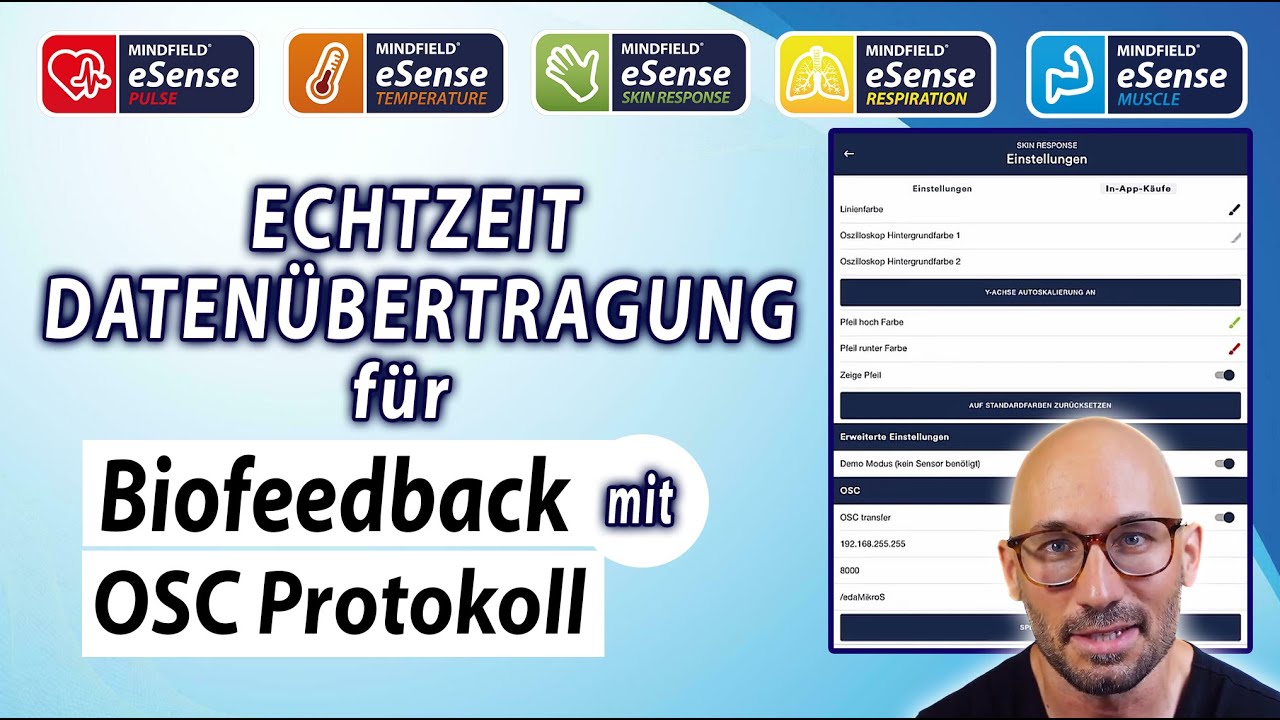
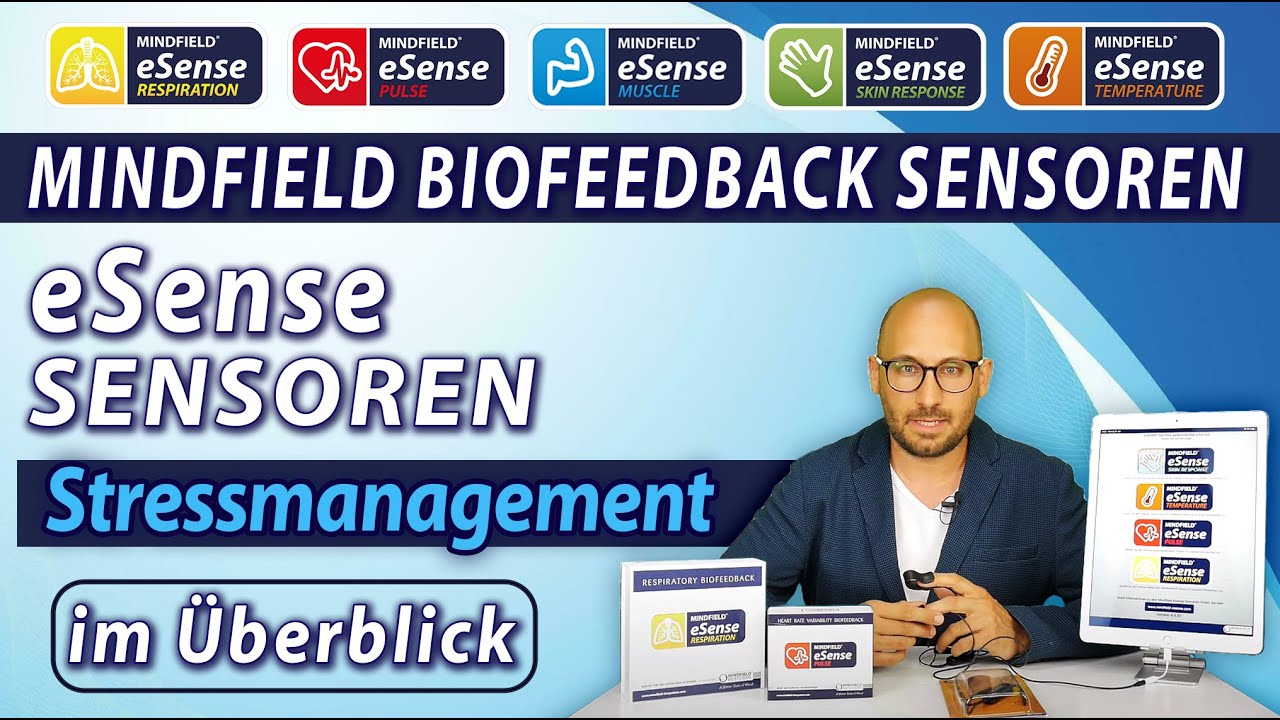
The Mindfield eSense sensors, paired with the free eSense app, offer an ideal way to practice biofeedback conveniently at home. This combination enables real-time capture and display of physiological parameters like skin conductance, temperature, and heart rate. Users can work on improving both their physical and mental state at their own pace. Our shop offers a range of devices: the eSense Skin Response (skin conductance), eSense Temperature (temperature), eSense Pulse (heart rate / HRV), eSense Respiration (breathing), and eSense Muscle (muscle activity). Every device ships with everything you need to get started with effective home training.
Biofeedback FAQ
What is biofeedback?
Biofeedback is a technique that makes it possible to consciously perceive and learn to control physiological processes.
How does biofeedback work?
Biofeedback measures physiological processes like heart rate, breathing, or muscle tension in real time and displays them visually or through audio feedback. Over time, users learn to consciously influence these processes and improve their health.
What physical parameters can biofeedback measure?
Biofeedback can measure parameters such as heart rate, skin temperature, skin conductance, muscle tension, and breathing rate.
How does biofeedback support mental relaxation?
Biofeedback supports mental relaxation by monitoring physiological parameters and enabling users to regulate their physical responses to stress.
How is the accuracy of biofeedback data ensured?
Accuracy is maintained through proper device calibration, user training, and regular equipment maintenance.
What are the practical applications of biofeedback?
Biofeedback is used in areas such as sports performance optimization, stress management, and general well-being training.
What are the limitations of biofeedback?
Limitations include technical constraints, individual differences in user response, and the need for careful data interpretation.
What are the benefits of investing in biofeedback?
Investing in biofeedback offers health benefits, promotes well-being, and provides long-term cost efficiency through preventive health management.
What does a skin conductance (EDA) sensor measure?
A skin conductance sensor measures changes in the electrical conductivity of the skin, which reflects autonomic nervous system activity related to stress, relaxation, and emotional states.
What does heart rate or heart rate variability (HRV) tell you in biofeedback?
Heart rate measurement provides insights into cardiovascular health and autonomic balance, while HRV analysis reveals how well the heart adapts to stress and recovery.
How does biofeedback help with emotion management?
Biofeedback supports emotion management by capturing physiological and psychological parameters and making emotional responses visible and trainable.
Why is device calibration important for biofeedback?
Calibration is essential for precise measurements and the validity of results, ensuring that the data you base your training on is accurate.
Frequently Asked Questions
What does a skin conductance (EDA/GSR) sensor measure?
An EDA sensor measures the electrical conductivity of the skin, which is influenced by sweat gland activity. Under stress or emotional arousal, sweat production increases and so does skin conductance. During relaxation, it decreases. The eSense Skin Response uses this principle for biofeedback training.
What is the difference between EMG and EDA?
EMG (electromyography) measures electrical activity in muscles — essentially muscle tension and relaxation. EDA (electrodermal activity) measures skin conductance, which depends on sweat gland activity. Both parameters reflect different aspects of the stress response.
Which biofeedback parameter should I start with?
For beginners, skin conductance (EDA) or skin temperature are good starting points, as both respond quickly and noticeably to tension and relaxation. For HRV training, the eSense Pulse is a strong choice. The best parameter depends on your personal training goal.
Recommended Products for Your Training
- eSense Skin Response – Skin conductance sensor (GSR/EDA) for biofeedback training
- eSense Temperature – Skin temperature sensor for relaxation training
- eSense Pulse – Mobile ECG sensor for HRV biofeedback
- eSense Muscle – 1-channel EMG sensor for muscle training
- eSense Respiration – Breathing sensor for respiratory biofeedback