

Kubios HRV Team Readiness 5.2.0 — Group HRV Monitoring for Sports, Coaching and Research
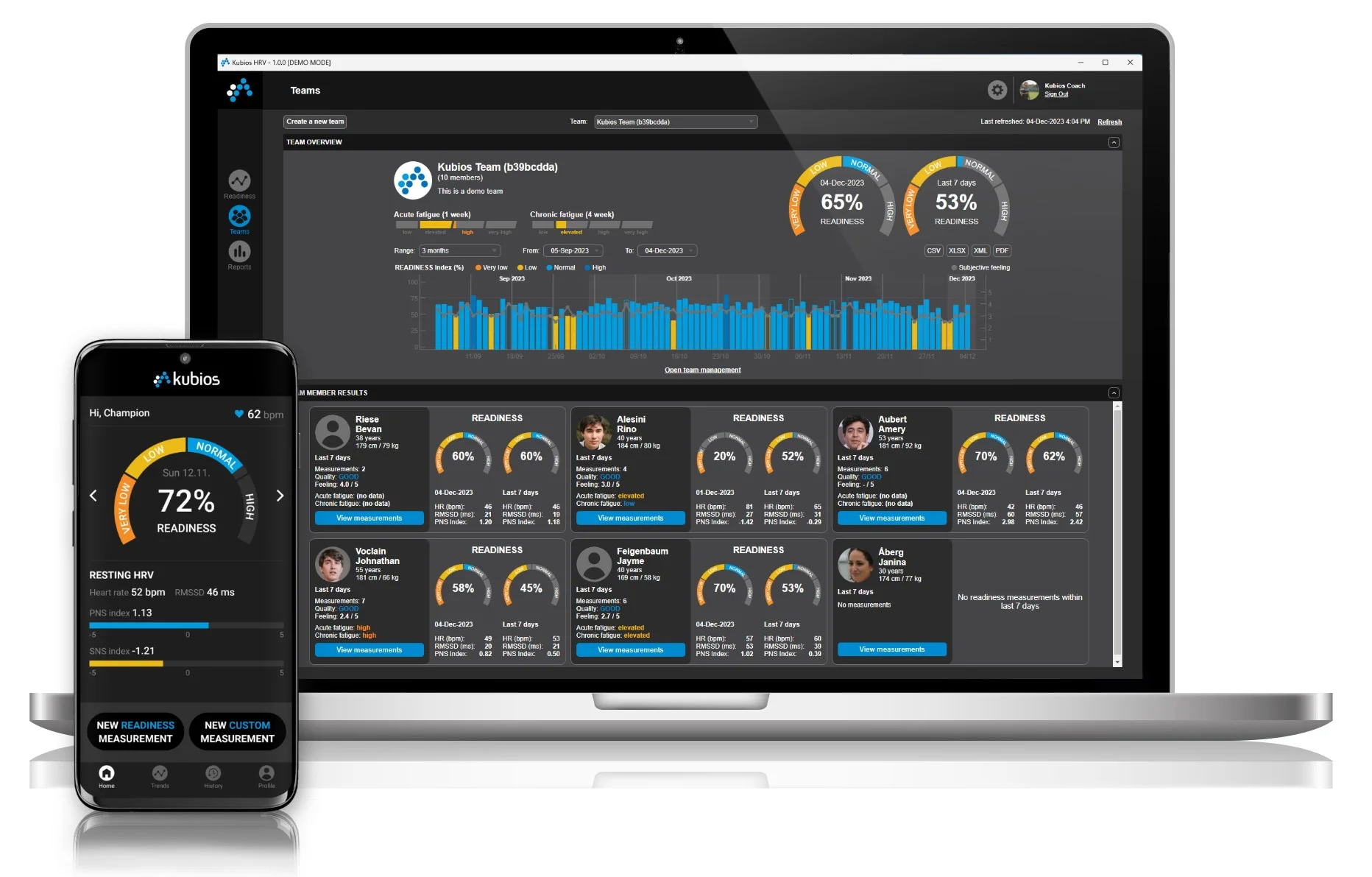
Kubios HRV Team Readiness is professional software for monitoring physiological readiness, recovery and training load across an entire team. Built on the scientifically validated Kubios HRV analytics used in over 1,000 peer-reviewed studies, it turns daily 2-5 minute HRV measurements into actionable insights for coaches, sports scientists, wellness professionals and clinical researchers.
The 5.2.0 release (May 2026) adds a dedicated HRV analysis module for sport and exercise sessions — including ventilatory thresholds (VT1 & VT2), oxygen consumption (VO₂), Training Impulse (TRIMP), heart rate recovery (HRR) and a GPS-based Route Explorer.
Smartphone-only measurement — no chest strap required
Your team members do not need to buy any hardware. Daily readiness measurements can be taken directly with a smartphone using seismocardiography (SCG) — the phone’s built-in accelerometer detects heartbeat-driven micro-movements of the chest. The method is independently validated against ECG and optical HR sensors and reaches accuracy comparable to chest-strap devices for resting HRV.
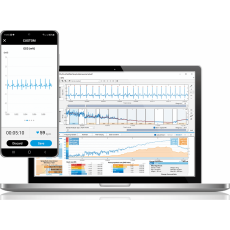
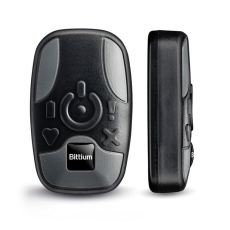
If you prefer maximum precision (e.g. for clinical-grade studies or athletes who already own a Polar H10/eSense Pulse), a Bluetooth chest-strap HR sensor remains fully supported — see the eSense Pulse as our recommended ECG-quality companion.
Operating system: Windows 10/11 and macOS (12 Monterey or newer). Mobile app: Kubios HRV App for iOS and Android (free for all team members).
Module Architecture and Core Features
Version 5.2.0 organises the software into three working modules that map directly to your daily workflow:
1. Readiness Module — Daily Recovery Status
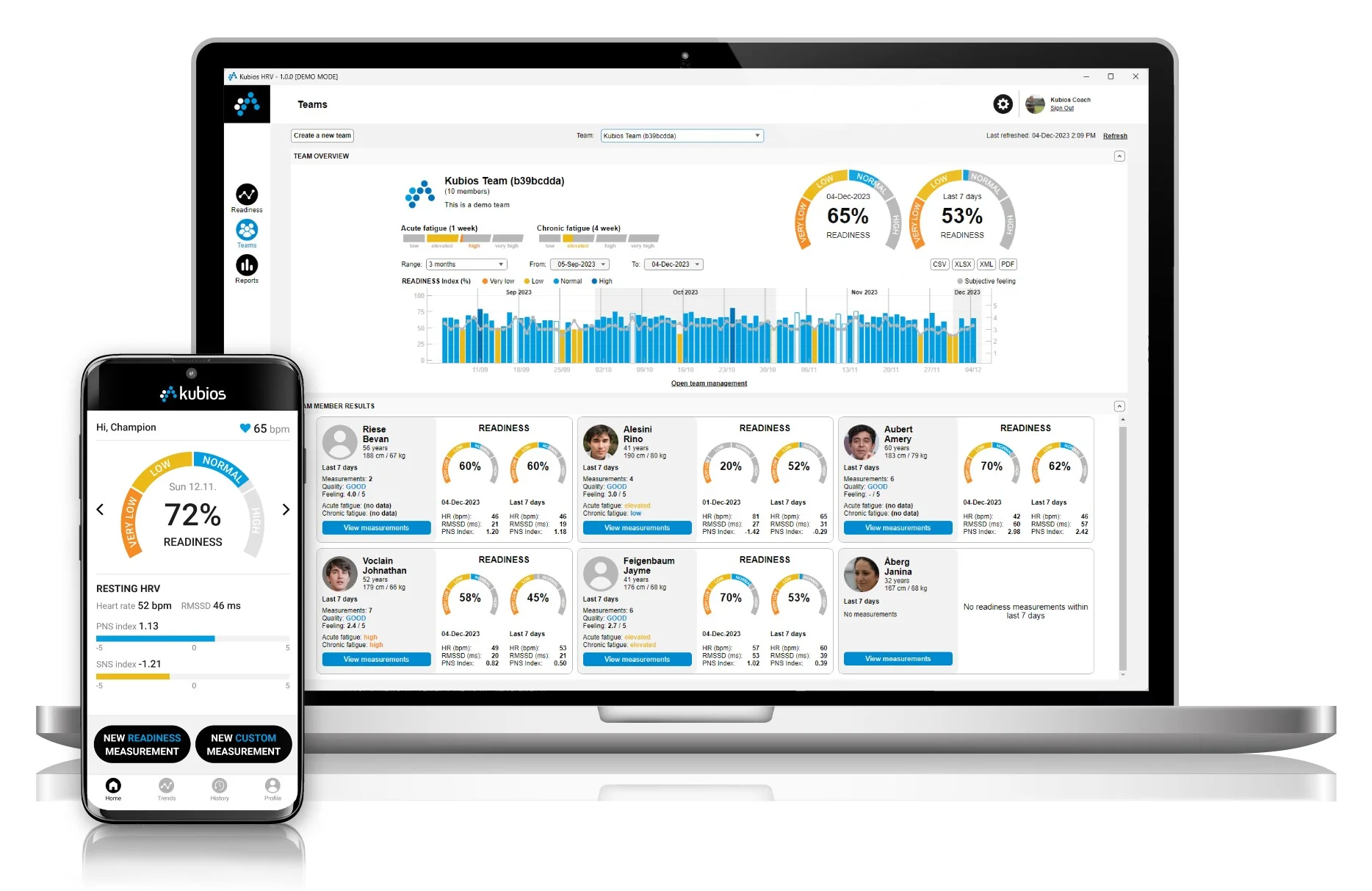
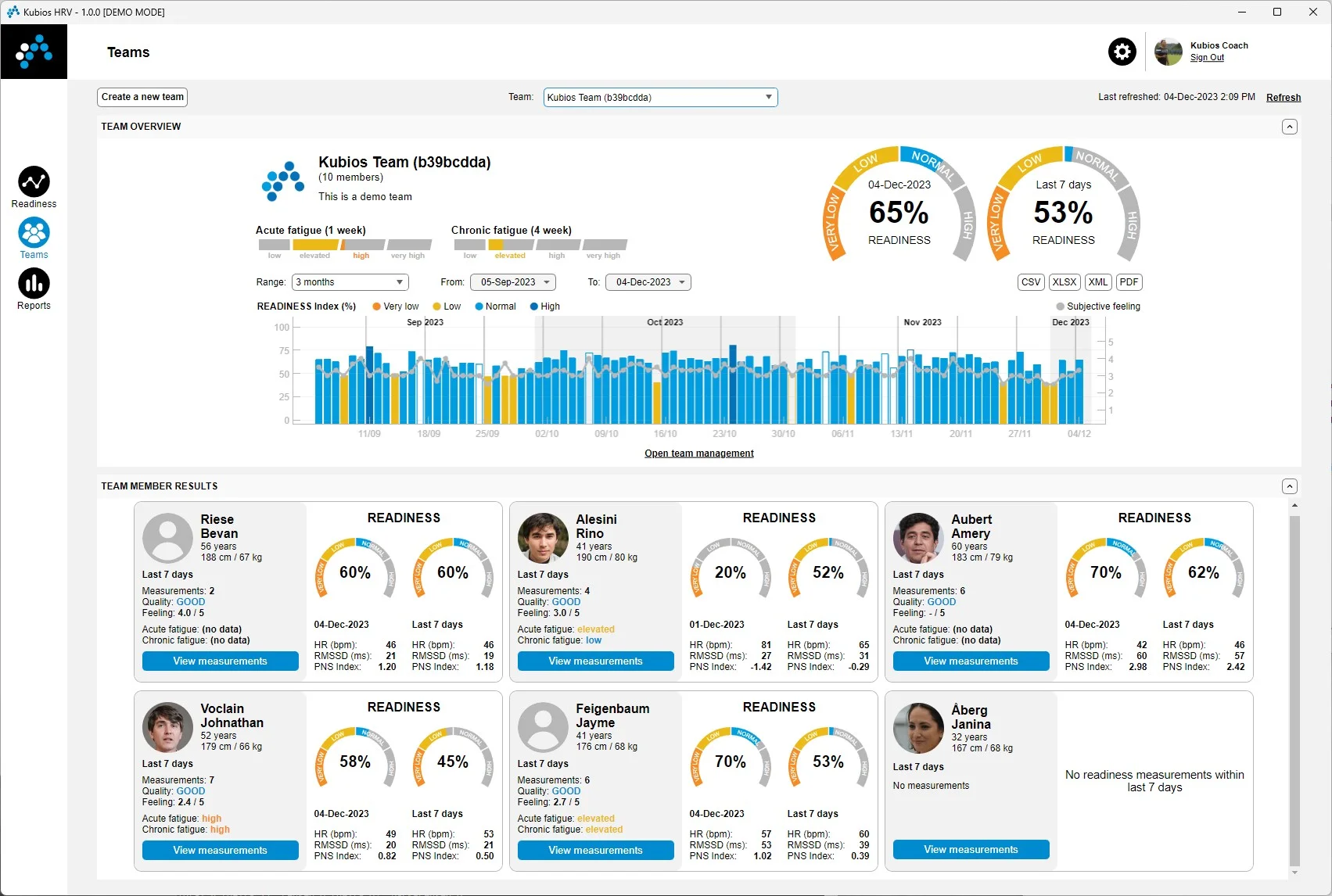
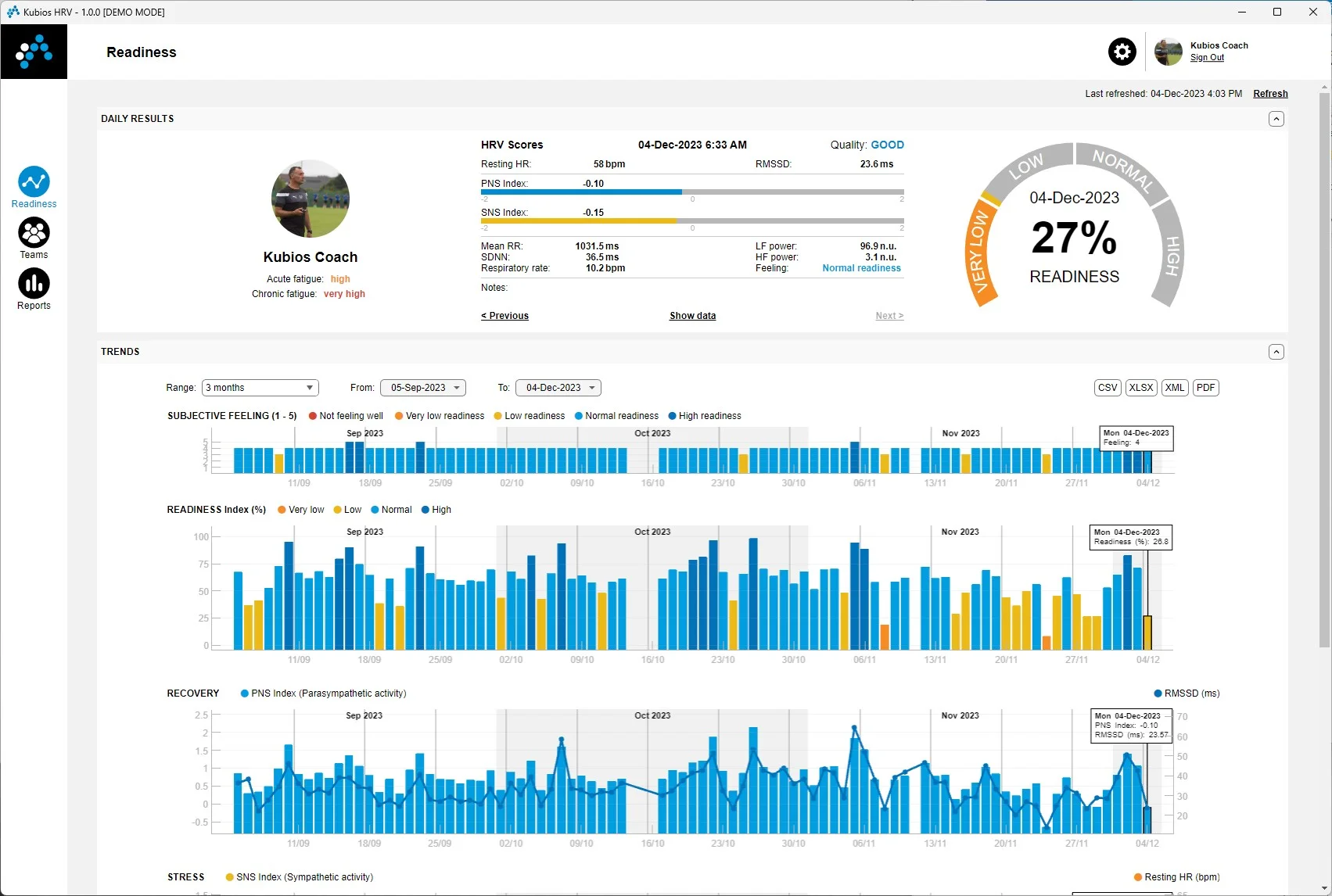
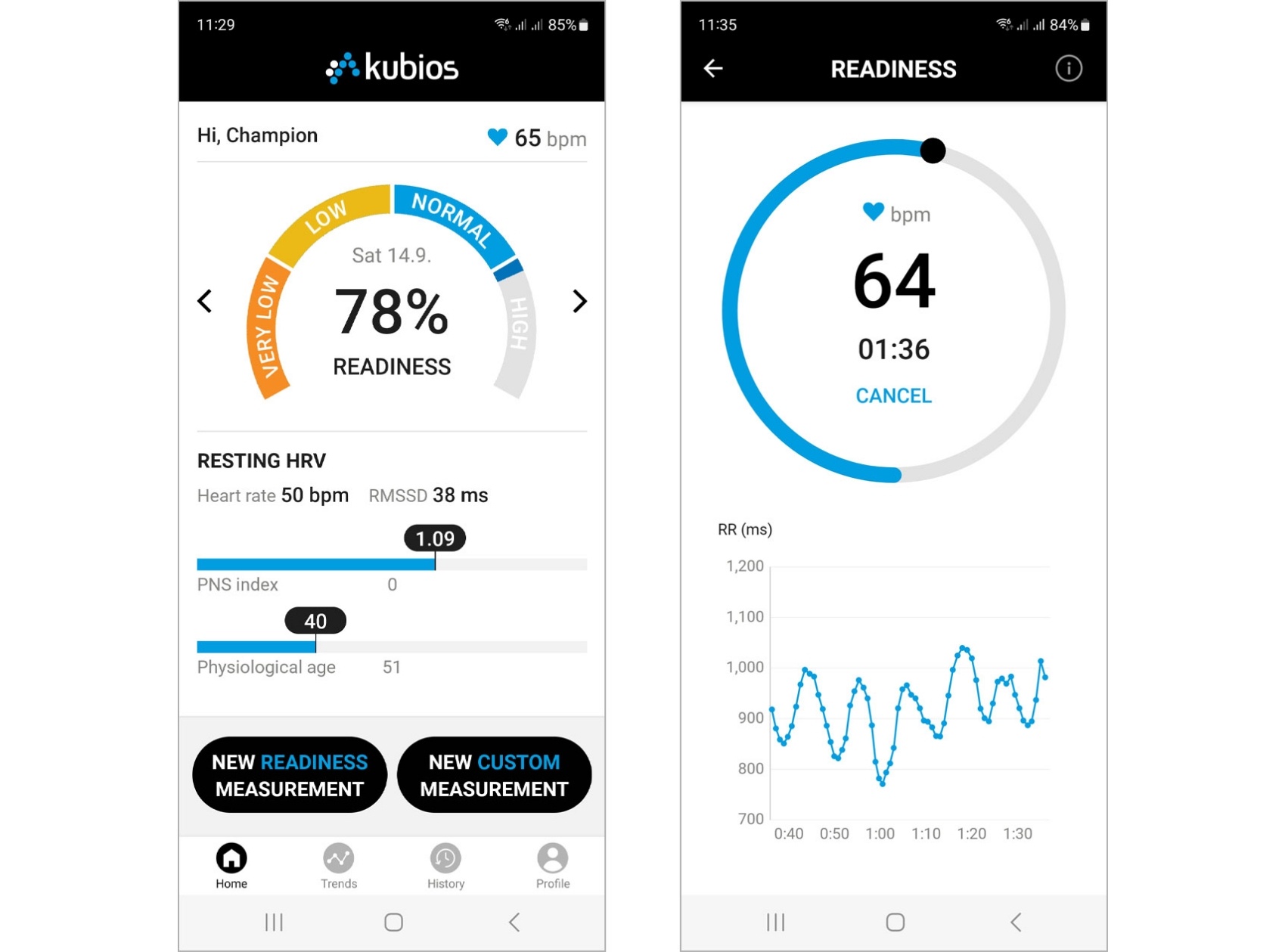
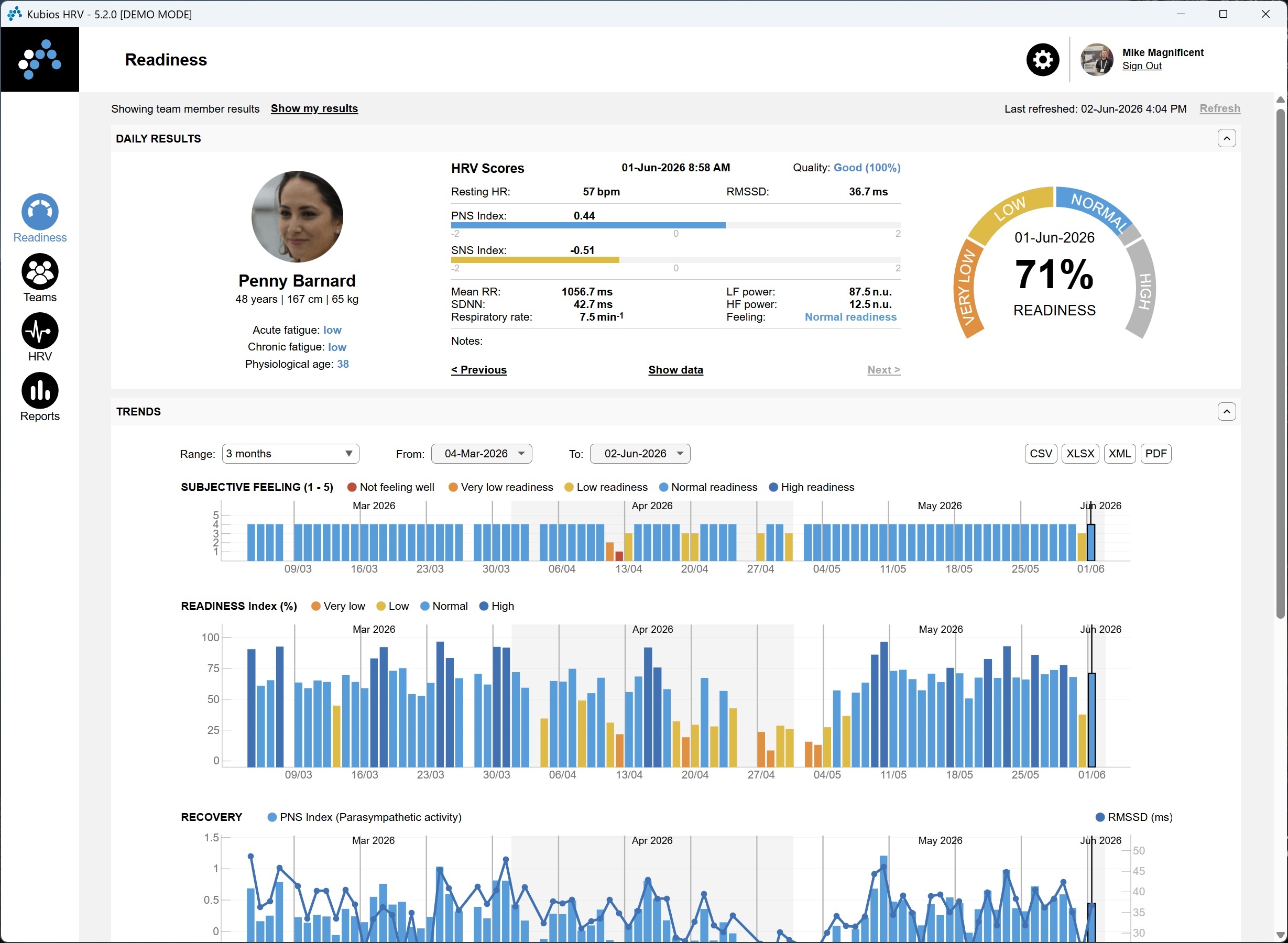
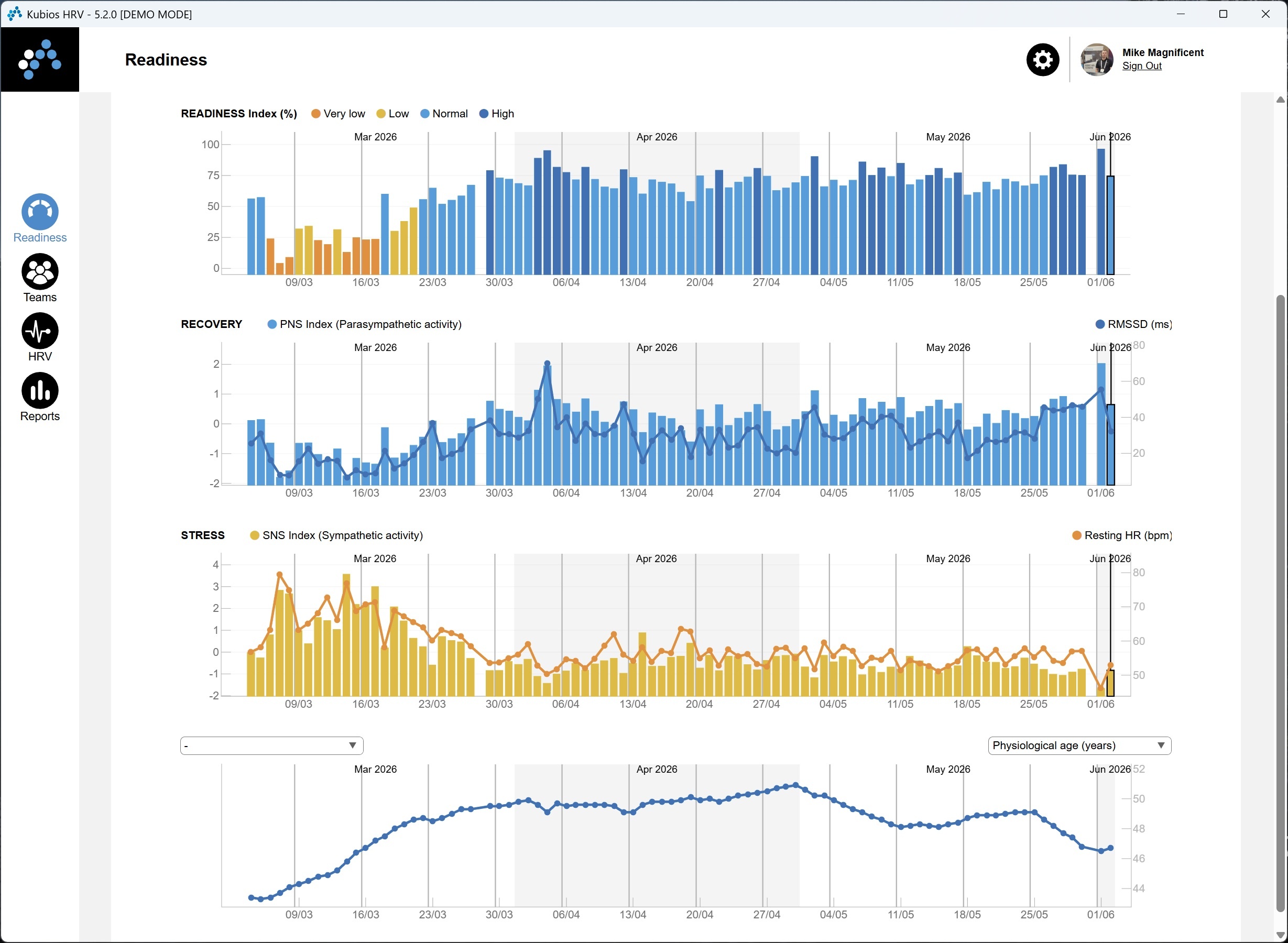
- Personalised Readiness Index (0–100 %) with four bands (Very Low / Low / Normal / High). Calibrates to each member’s individual baseline in 2-3 weeks.
- Acute and chronic fatigue alarms (Low / Elevated / High / Very High) based on user-data-tuned thresholds.
- Physiological Age — an HRV-derived estimate of cardiovascular function relative to chronological age.
- Subjective feeling score (1-5) captured by team members each morning — correlates with the objective HRV-based score.
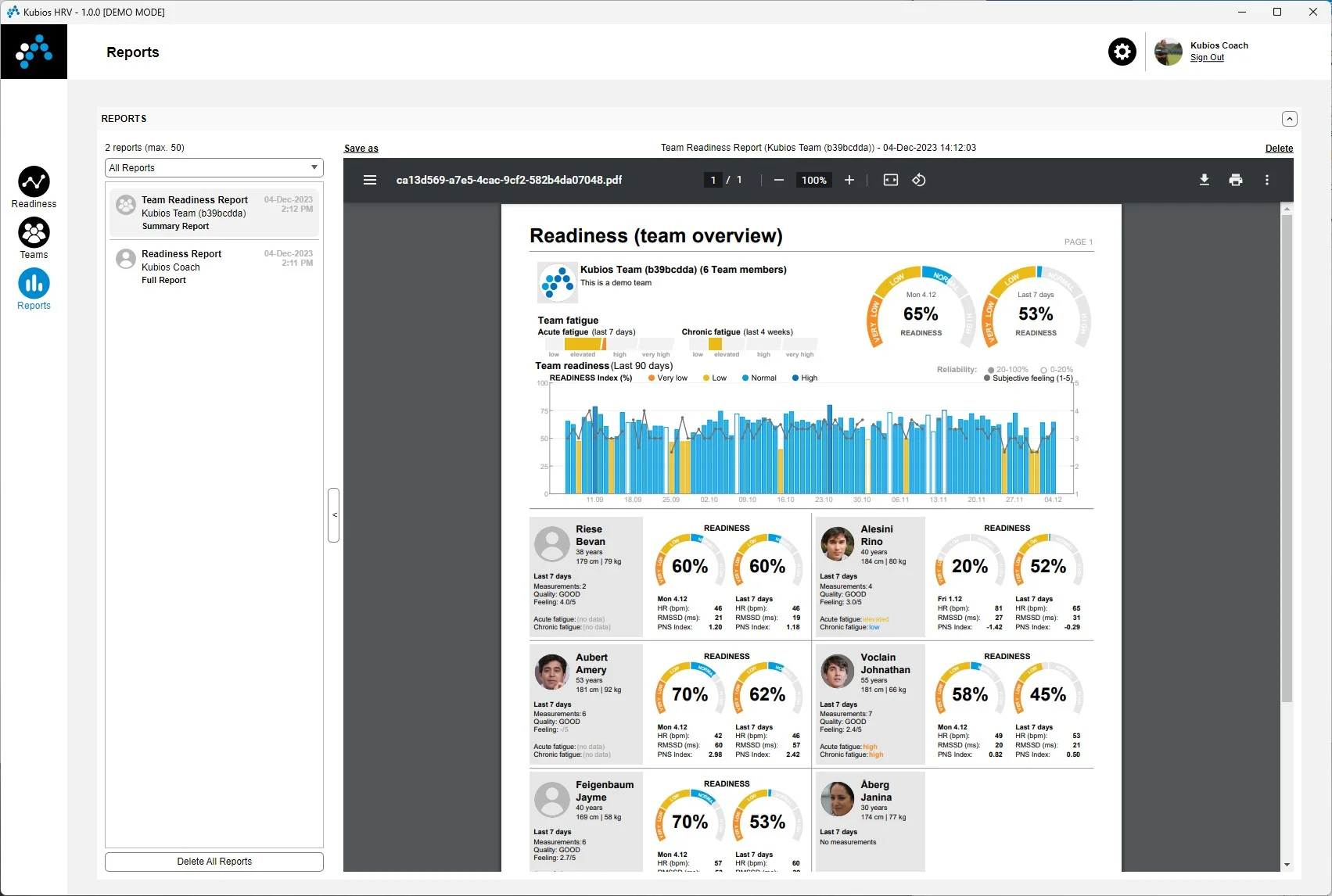
- Updated readiness report (NEW 5.2.0): 2-page PDF with 90-day daily trends, 12-month weekly averages broken down by day and month, and a freely choosable end date for retroactive reports.
2. Teams Module — Manage Your Team(s)
- Multiple teams from one admin account (total members limited by your license tier).
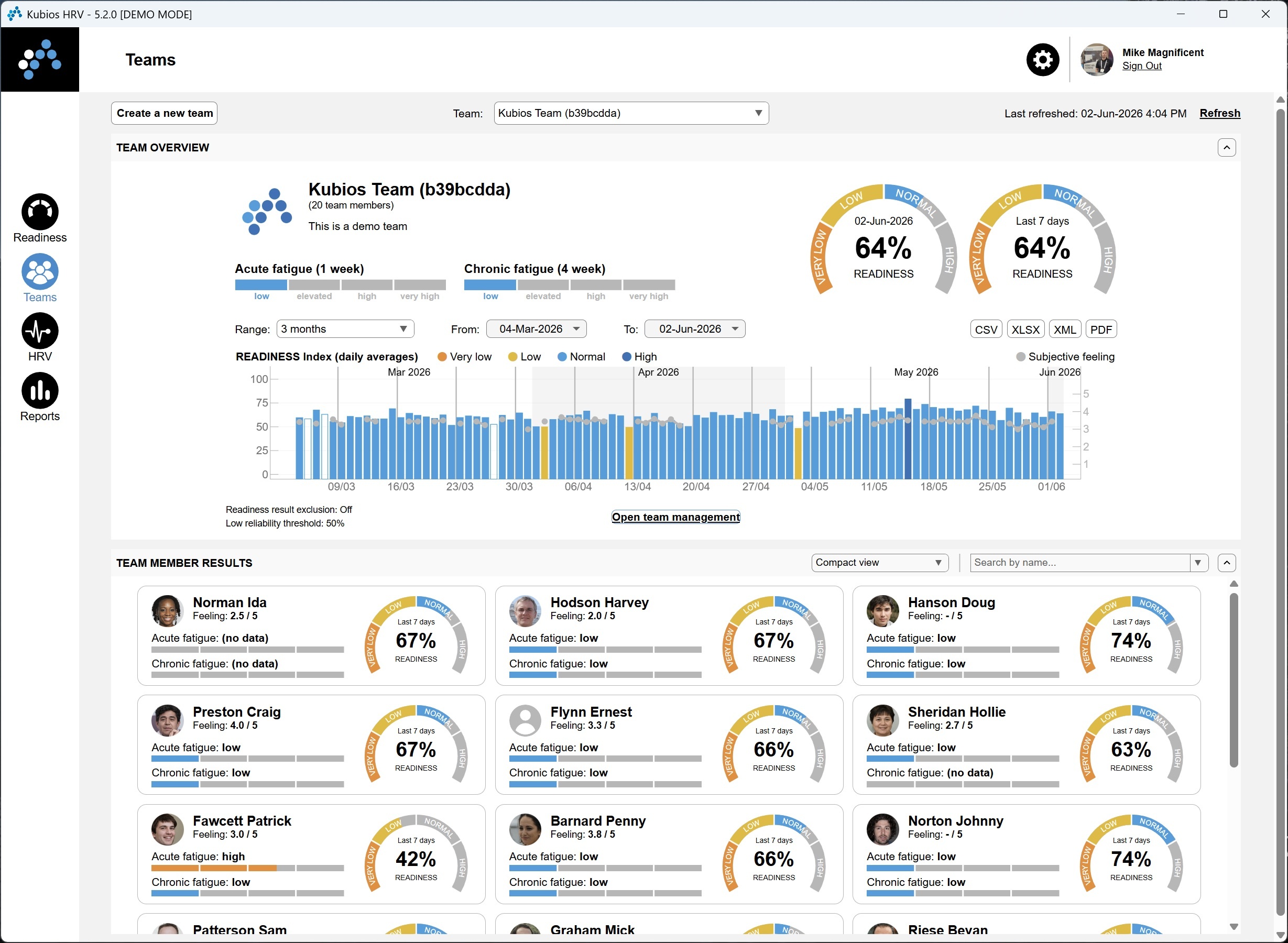
- Three result views per team: detailed (full HRV metrics + fatigue), compact (subjective feeling + readiness only) and timeline (trend visualisation).
- Team-wide settings: standardise relaxation period and measurement duration, hide individual results from athletes, set quality threshold.
- New in 5.2.0: enable team members to perform custom HRV measurements via the app (training sessions, sleep, etc.) — not just morning readiness.
- Manager role: Medium-tier licenses include 1 manager, Large-tier includes 2 managers + optional API access.
3. HRV Module (NEW 5.2.0) — Deep-Dive Analytics
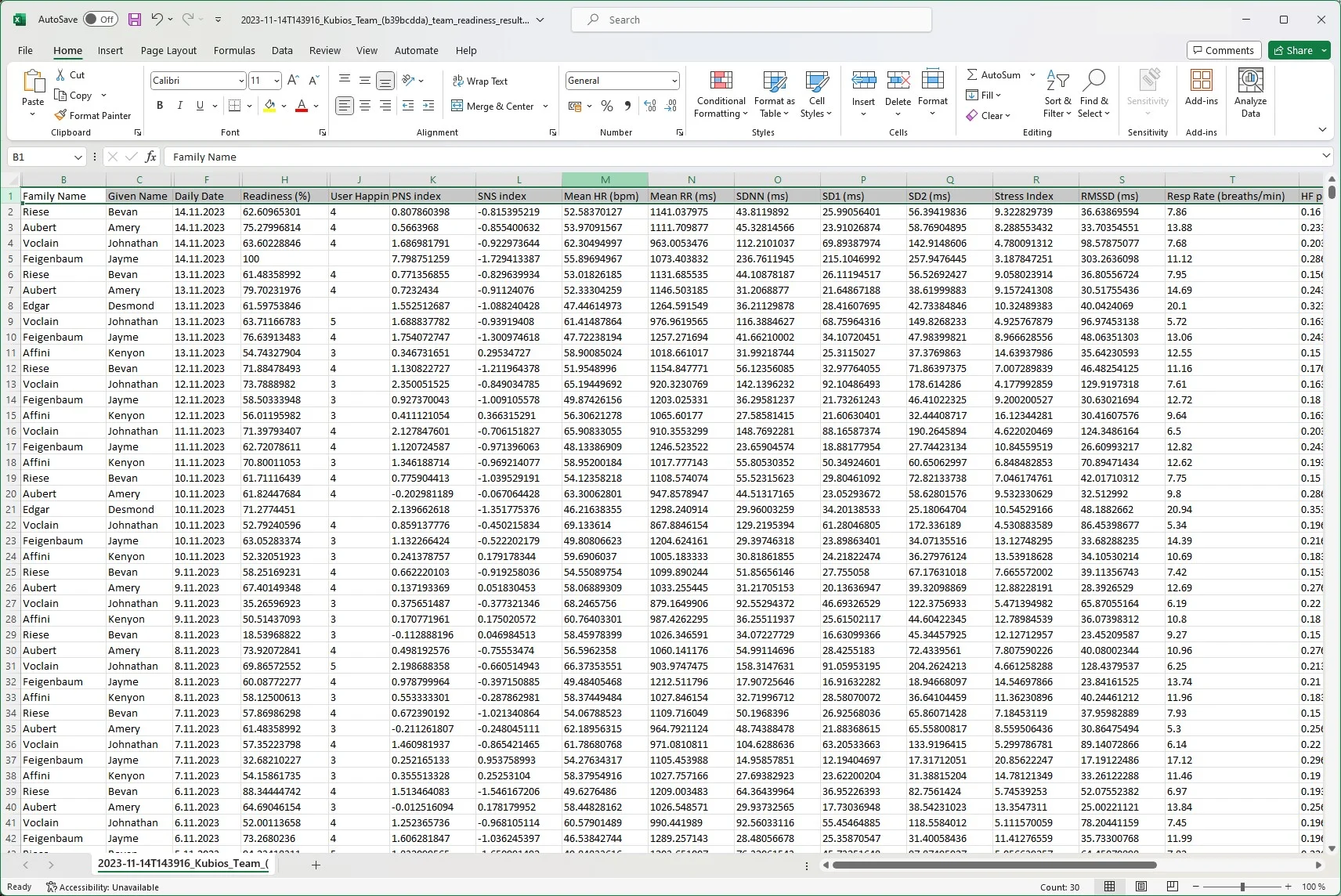
- Kubios Data Browser: browse, open and export every measurement your team has recorded via the Kubios HRV app or imported as FIT file. Export raw RR/IBI data as CSV or EDF for downstream tools.
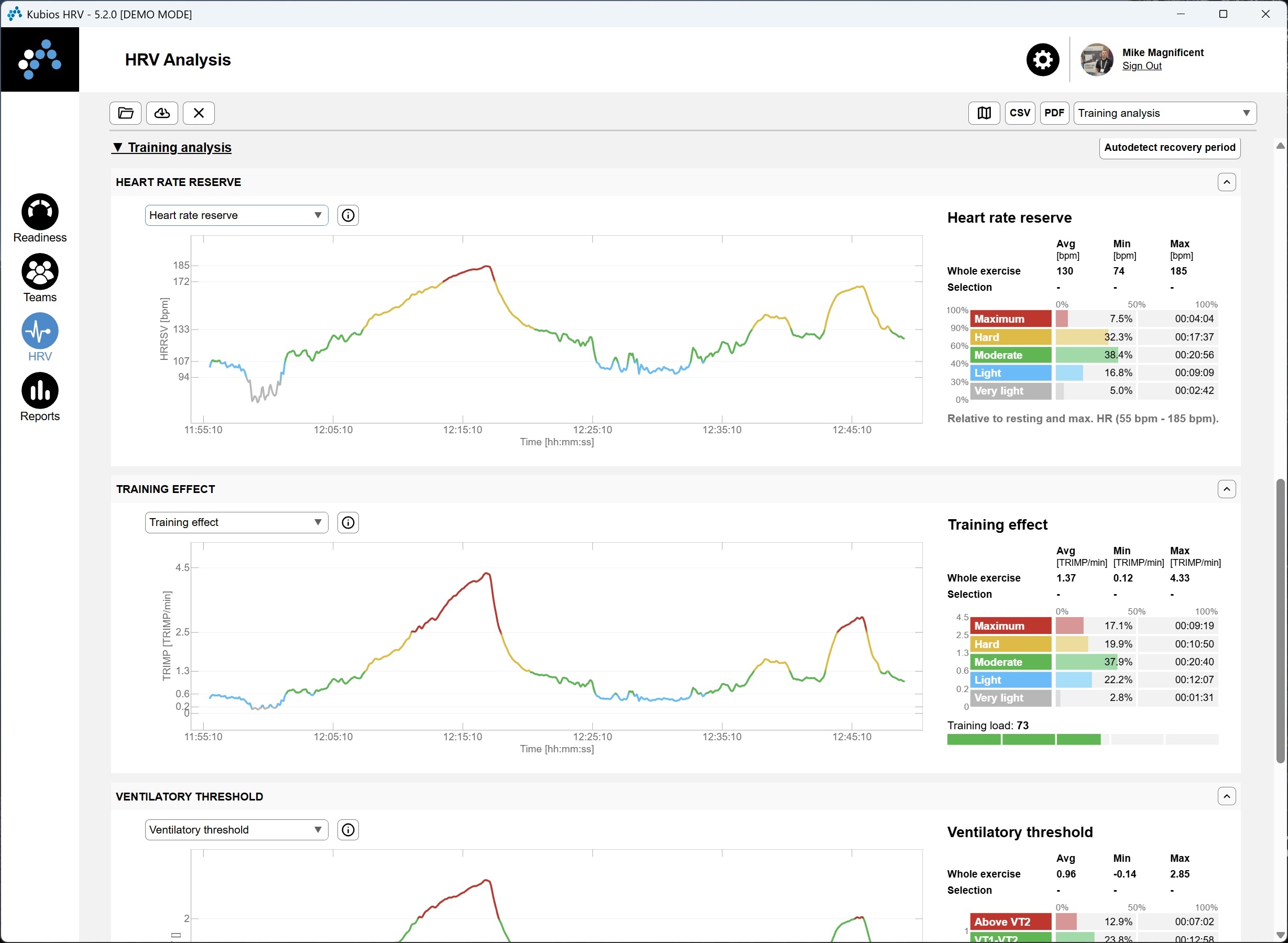
- Training Analysis: dedicated module for exercise sessions with heart rate (HR), respiratory rate (RESP), Training Impulse (TRIMP), oxygen uptake (VO₂), ventilatory thresholds (VT1 + VT2) and heart rate recovery (HRR with 30s/60s/120s/300s segments).
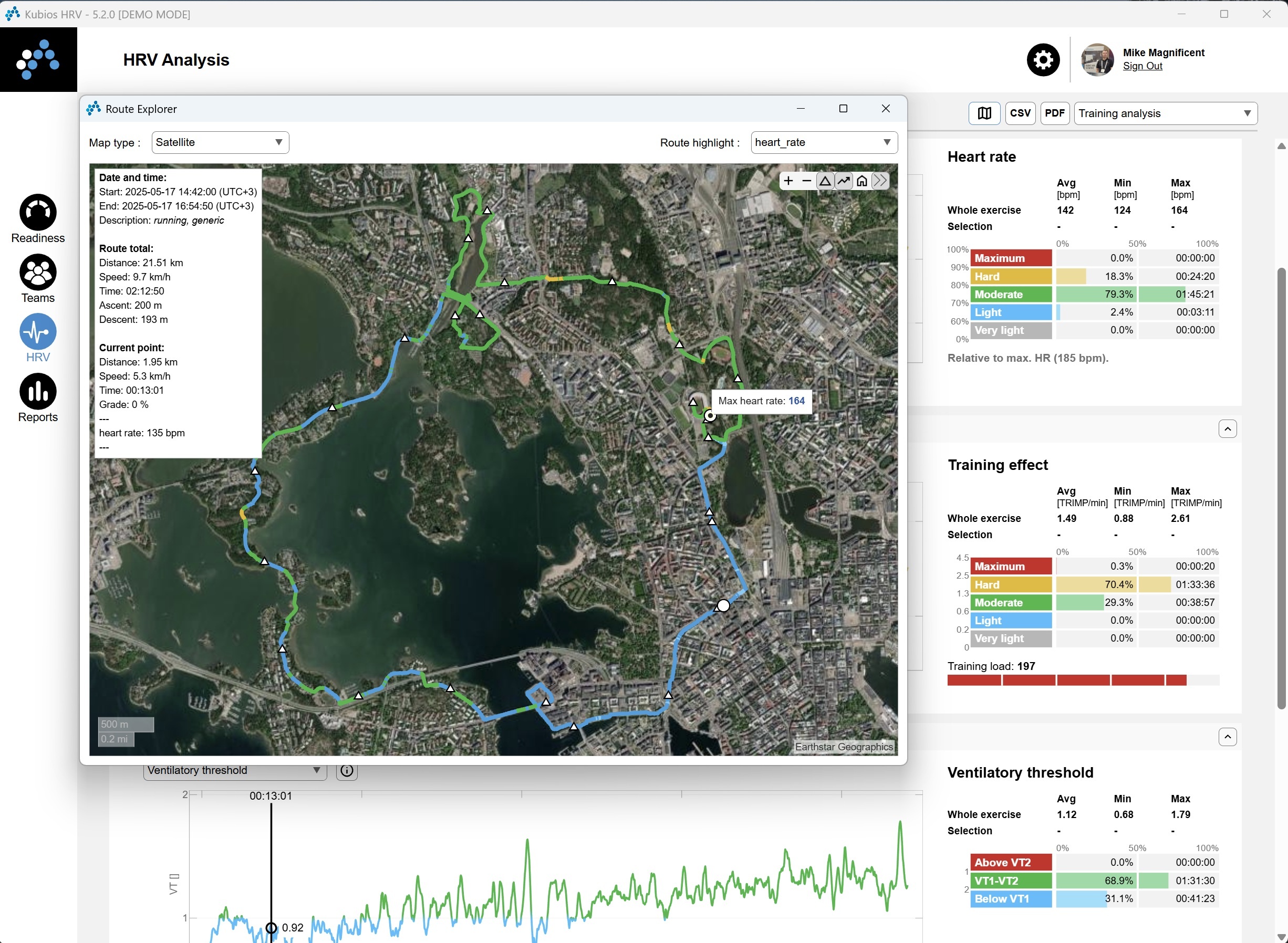
- Route Explorer: visualise GPS tracks, highlight any segment of the route and read the performance metrics calculated for exactly that segment.
- Validated pre-processing: automatic noise detection, beat correction and baseline removal — the same algorithms that power Kubios HRV Scientific.
Kubios HRV Team Readiness in action
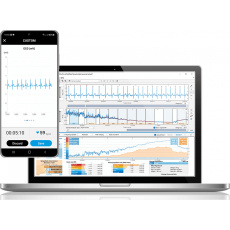
See Kubios HRV Team Readiness at work – from smartphone measurement to team overview and training analysis.
Video Tutorial: Analyzing your HRV data in Kubios HRV Scientific
Kubios HRV Team Readiness covers the daily team-level reporting. For in-depth analysis of individual recordings, Kubios HRV Scientific comes into play: in this tutorial, Kubios shows the two analysis approaches – analysis samples and time-varying HRV analysis.

What’s New in Version 5.2.0 (May 2026)
Version 5.2.0 is the most significant update since the first public release. It transforms Kubios HRV Team Readiness from a pure readiness-monitoring tool into a full sport-physiology platform — while keeping the simple daily-measurement workflow your team already uses.
1. Training Analysis — Physiological Performance Insights
A brand-new HRV analysis module for exercise sessions. Open any custom Kubios HRV App recording or import FIT files from compatible sensors, then explore four panels of metrics:
- Heart rate (HR) and HR reserve — instantaneous and zone-based intensity.
- Training Impulse (TRIMP) — quantifies internal training load using individual resting HR and maximum HR.
- Ventilatory thresholds VT1 and VT2 — HRV-based estimation of the aerobic and anaerobic transitions, without requiring lab gas analysis.
- Oxygen uptake (VO₂) and respiratory rate (RESP) — estimated continuously from HRV and HR patterns.
- Heart rate recovery (HRR) — fast 30-second T30 plus 60s, 120s and 300s recovery values, when the recording contains a recovery phase.
Each metric ships with in-app information dialogs explaining how it is calculated and how to interpret it in coaching practice. Reports can be exported as PDF (for athletes/coaches) and CSV (for further analysis in Excel, R or Python).
2. Route Explorer — GPS-based Segment Analysis
For training data with GPS tracks (FIT files from Polar Vantage, Garmin, Suunto and others), the new Route Explorer lets you click into the map and highlight any segment of the workout. The performance metrics in the side panels instantly recalculate for exactly that selection — ideal for analysing hill repeats, intervals or recovery sections within a longer session.
3. Kubios Data Browser — Manage Cloud Measurements
All measurements your team members record with the Kubios HRV App are automatically uploaded to the Kubios Cloud. The new Data Browser inside the desktop software lets you:
- Filter by date range, measurement type (readiness or custom), team member or free-text search.
- Open any measurement directly in the HRV analysis module — no manual file transfer needed.
- Export single measurements or batches as CSV / EDF for archiving or downstream processing.
- Refresh the cloud list on demand.
4. Expanded Team Management — Custom Measurements
You can now enable team members to record custom HRV measurements directly from the Kubios HRV App — not only the morning readiness check. This means coaches can collect specific recordings (training sessions, breathing exercises, sleep windows) without giving each athlete a separate desktop license. All recordings appear automatically in the Data Browser.
5. Enhanced Readiness Reporting
The readiness PDF report has been redesigned as a two-page layout with deeper long-term trends: 90-day daily summaries with high/low periods and physiological vs. subjective correlations, plus 12-month weekly averages broken down by weekday and month. The report end date can be freely chosen, so you can generate retroactive reports for any historical window.
Beyond the headline features, 5.2.0 also includes various performance improvements, bug fixes and a refreshed team-overview report layout that matches the in-app design language.
How a Typical Coaching Workflow Looks
- Setup (one-time, ~10 minutes): The team admin installs the desktop software on Windows or macOS, creates a team and generates an invite key.
- Onboarding (per member): Each athlete or client installs the free Kubios HRV App, creates a Kubios account and joins the team with the invite key. Done.
- Daily measurement (per member, 2-5 min): Soon after waking up, the member opens the app, places the smartphone on their chest (or pairs a BLE chest strap), starts the recording, optionally rates their subjective feeling (1-5) and saves.
- Cloud sync (automatic): The recording is uploaded to the Kubios Cloud, the validated pre-processing pipeline runs noise detection, beat correction and HRV analysis, and the personalised readiness index is computed.
- Coach review: In the desktop software, the coach sees the team overview — a glanceable status for every member — and drills down into individual results for at-risk athletes, looking at acute / chronic fatigue, HRV trends and the new physiological age.
- Training decisions: Based on the readiness data, the coach adjusts training intensity, recovery periods or load distribution — either intuitively or by exporting CSV data into the team’s existing planning platform via the API (Large tier).
- Training analysis (5.2.0 NEW): After key sessions, the coach uses the HRV module to analyse a training recording in depth: HR zones, TRIMP, VT1/VT2, VO₂, recovery and GPS segments — producing PDF or CSV reports for the athlete.
License Models & Prices
Select your team size and subscription period above — the price updates automatically. All prices include statutory VAT.
| Team size | Managers | 1 year | 2 years | 3 years |
|---|---|---|---|---|
| Small (up to 10 members) | 0 | 399.84 € | 714.00 € | 963.90 € |
| Medium (up to 25 members) | 1 | 856.80 € | 1,547.00 € | 2,058.70 € |
| Large (up to 50 members) | 2 | 1,428.00 € | 2,570.40 € | 3,427.20 € |
| Enterprise (up to 100 members) | 4 | 2,142.00 € | 3,855.60 € | 5,140.80 € |
| Enterprise (up to 200 members) | 8 | 3,998.40 € | 7,199.50 € | 9,591.40 € |
Each package includes 1 admin license (creates and manages teams). Manager accounts depending on tier (see table). Your team members use the free Kubios HRV app — no extra hardware required.
Current version: 5.2.0 (May 2026)
The latest version adds a dedicated HRV analysis module to Kubios HRV Team Readiness with training analysis (TRIMP, ventilatory thresholds VT1/VT2, VO₂, heart rate recovery), a GPS-based Route Explorer and the Kubios Data Browser for managing all cloud measurements. You can find the full version history in the Release notes tab further down this page.
Hardware Options — Smartphone, eSense Pulse or Polar H10
Kubios HRV Team Readiness gives every team member three measurement options — you choose what fits your situation:
Smartphone only (no extra hardware)
The Kubios HRV App uses seismocardiography (SCG) to detect heartbeat-driven micro-movements via the phone’s accelerometer. For resting HRV measurements, the accuracy is comparable to chest-strap devices. Zero hardware cost, instant start.
Mindfield eSense Pulse (recommended Bluetooth chest strap)
Our own eSense Pulse is a Bluetooth HR sensor designed for HRV applications: a chest strap with a removable transmitter, validated against medical-grade ECG. Use of the Kubios HRV App with the eSense Pulse to record HRV measurements is included in every Kubios HRV Team Readiness license — no additional subscription needed.
Polar H10 or other BLE chest straps
The Kubios HRV App also supports Polar H10, Polar H9 and other Bluetooth Low Energy heart-rate sensors that expose the Heart Rate Service (UUID 0x180D). If your team already owns these devices, they integrate seamlessly.
Who Uses Kubios HRV Team Readiness
- Professional and amateur sports teams: Football, sailing, cycling, swimming, endurance and combat sports — optimise training intensity, identify overreaching early, individualise recovery.
- Strength & conditioning coaches and sports physiologists: Combine daily readiness data with the new training-analysis module (TRIMP, VT1/VT2, VO₂, HRR) for evidence-based load management.
- Wellness coaches and therapists: Support clients with lifestyle changes, stress management and resilience programmes — including patients with severe sympathetic hyperstimulation.
- Corporate health and occupational programmes: Track employee well-being and stress load across teams; integrate with existing occupational health platforms via API.
- Researchers and academics: Robust longitudinal HRV data collection with remote participants. Validated pre-processing makes the data publishable; CSV / EDF export feeds R, Python or SPSS pipelines.
- Clinical research and intervention studies: Distribute the Kubios HRV App to study participants, monitor compliance and HRV trends in real time, export raw data for ethics-committee-approved analysis.
Frequently Asked Questions (FAQ)
What is Kubios HRV Team Readiness 5.2.0?
Kubios HRV Team Readiness is desktop software (Windows / macOS) that lets a coach or team admin monitor the daily physiological readiness, training load and recovery of an entire team based on heart rate variability (HRV). Team members record short HRV measurements with the free Kubios HRV App on their smartphone (no chest strap required) and the coach sees aggregated results in real time. Version 5.2.0, released in May 2026, adds a dedicated HRV analysis module with training analytics (TRIMP, VO₂, VT1/VT2, HRR), a GPS-based Route Explorer and a Kubios Data Browser for managing cloud measurements.
What hardware do my team members need?
Nothing beyond a smartphone. The Kubios HRV App (iOS / Android, free) uses seismocardiography (SCG) to detect each heartbeat via the phone’s accelerometer when the device is placed on the chest. For resting HRV measurements, accuracy is comparable to a Bluetooth chest strap. If you want maximum precision for clinical-grade research or already have hardware, the app also supports BLE chest straps such as the Mindfield eSense Pulse or Polar H10 / H9. Use of the app with any supported sensor is included in every Team Readiness license — no separate subscription needed.
How does the smartphone-only measurement (SCG) work and is it accurate?
The team member lays back, places the smartphone face-down on the centre of the chest and stays still for 2-5 minutes. The phone’s built-in accelerometer detects the mechanical micro-movements caused by each heartbeat — this is called seismocardiography. The Kubios HRV App extracts heartbeat times, computes interbeat intervals and feeds them through the same validated pre-processing pipeline used in Kubios HRV Scientific. Kubios has published a validation study comparing SCG against established optical HR sensors and ECG; for resting HRV the agreement is high. For maximum precision — for example in clinical research or competitive sport with very short measurement windows — a chest-strap ECG sensor remains the gold standard.
What does the new Training Analysis module (5.2.0) deliver?
Training Analysis is a dedicated HRV analysis module for exercise sessions. Open a recording from the Kubios HRV App’s custom measurement mode or import a FIT file from a compatible device (Polar Vantage, Garmin, Suunto). The module shows four panels: (1) heart rate and HR reserve over the whole session, (2) Training Impulse (TRIMP) for internal load quantification, (3) ventilatory thresholds VT1 and VT2 derived from HRV (without lab gas analysis), (4) oxygen consumption (VO₂) and respiratory rate. A heart-rate-recovery panel adds 30s T30, 60s, 120s and 300s recovery analysis. The Route Explorer overlays GPS data and lets you select any segment of the route to recalculate all metrics for just that selection. Reports export as PDF (for the athlete) and CSV (for further statistics).
Which license is right for my team size?
SMALL (336 EUR / year) covers up to 10 team members with 1 admin account — ideal for an individual coach, small sports group or a single research cohort. MEDIUM (720 EUR / year) covers up to 25 members and includes a second login (1 admin + 1 manager) so you can delegate day-to-day team management. LARGE (1.200 EUR / year) covers up to 50 members with 1 admin + 2 manager accounts and adds optional API access — suitable for professional teams, multi-coach setups or integration into existing training-data platforms. For larger teams or enterprise integrations, please contact us for a custom quote.
Can I integrate Kubios HRV Team Readiness with our own training platform?
Yes — via API access, available as an add-on for the LARGE tier (and Enterprise licenses). The API exposes both raw measurement data (RR intervals, raw signal channels where available) and computed HRV results in a structured format. This lets you push Kubios readiness data into your own dashboard, training-diary platform, athlete-management system or research database. For details on endpoints, authentication and data structures, contact us and we will involve Kubios technical sales directly.
How is Team Readiness different from Kubios HRV Scientific?
Kubios HRV Scientific is the full-featured single-user HRV analysis software for scientific publication-grade work — it supports many file formats (ECG, PPG, EDF, ACQ, MIT, FIT, custom CSV), animal HRV analysis, autonomic nervous system function tests (Valsalva, tilt, deep breathing) and detailed export options. Kubios HRV Team Readiness is built for groups: one admin (plus optional managers) monitors many team members, focused on daily readiness and recovery tracking. With 5.2.0, the gap has narrowed — the new HRV module brings training analysis (TRIMP, VT1/VT2, VO₂, HRR) into Team Readiness, which previously required Kubios HRV Scientific. If you need full file-format support, ANS function tests or animal data, choose Scientific; if you coach a team or run a longitudinal study with many remote participants, choose Team Readiness.
User Guide and Downloads
The official Kubios HRV Team Readiness User Guide (May 2026, version 5.2.0) is available as PDF:
⬇ Download User Guide (PDF, 3.3 MB, 10 pages)
The guide covers: quick-start setup, feature overview, installation and license activation, user-interface walkthrough, team creation and management, readiness module, HRV module (Data Browser + Training Analysis), reports module and settings. Original PDF from the manufacturer is also available at kubios.com.
Latest release notes: kubios.com/release-notes